By R. D Miller
An Open Letter
New Era: Dear Pope Francis, your election in March 2013 marked a significant change in the Roman Catholic Church. Being the first from Latin America and a Jesuit, your appointment to this leadership position emphasizes the importance of the church redirecting its attention to those who have been overlooked.

However, given the recent scandal of sexual abuse in the Catholic Church that many called a cover-up for decades, where lives have been destroyed, a breath of fresh air is now upon us.
The world is not expecting a sea change in the world overnight. Some have tried and failed, and it takes an alternative approach even walking a delicate biblical line and or political ideology to bring our society closer to a systematic social divide along many fronts is overdue.
I have spoken with a few black and brown people who are looking forward to your Latin American trip and understood that sometimes, geopolitical events force the church to revisit how it looks at the world issues that range from greed, inequality, racism, tolerance, and disparities between the haves vs. have-nots.
Though many of us who embraced the faith from our parents’ teaching as children are now on the sidelines, and recently we are rethinking our departure. Even some nonbelievers admire the church’s new platform of openness for dialogue, but they too have more questions than scriptures.

In contemporary discourse, there remains a persistent tension regarding the compatibility of sexuality with biblical teachings and various philosophical frameworks that perpetuate the marginalization of certain communities. Nevertheless, the church persists and possesses the capacity to convey a profound message of tolerance that transcends the confines of the pulpit.
I am reaching out not as an individual defined by sexual orientation or religious beliefs, but as a person who holds the conviction that our collective humanity requires a profound renewal. Reflecting on Saint Paul’s epistle to the Romans, one can discern a profound appeal for unity.
Your visit, Pope Francis, particularly to Ecuador, Bolivia, and Paraguay, is poised to enhance that message and potentially realign the trajectory of the Catholic faith, which may find itself grappling with pressing inquiries regarding its future direction.
Several cultures fled tragedies centuries ago based only on religious convictions, and this divide remains today. We cannot ignore the racial prejudice that has always existed at this institution. And, while communion implies unity, many who participate still hold anti-Semitic views, racist attitudes toward blacks, battle for gender equality, and believe that one’s socioeconomic level dictates seating patterns within the church.

In many Latin American countries, black people continue to face discrimination. I will not use the terms people of color, but the less dark color in this context. Simply put, when many lighter-skinned Hispanics migrate to other industrial countries, some become aware that they are people of color.
Unfortunately, some people still believe that black people should be over there, and less than others, but only through education and collaboration can these groups of color become a force, but let me return to this trip.
The Confession, or the alternative lesson, rarely talked about.
The Catholic Church still enjoys over 40 percent of its members from the region, which is about 430 million throughout Latin America and the Caribbean, according to religious scholars. And approximately 69 percent of adults in Latin America identified as Catholic. Many political leaders would be on their knees praying for these numbers today in a much-divided world to win an election.
Quietly, missing from these visits is a dialog for racial harmony. The Catholic faith taught us that all are equal, and we reconfirm that during communion when all drink from the same cup. This three-second feeling of inclusion often only lasts from the pulpit back to our seats.
What has transpired in the Dominican Republic, court ruling, threatening the deportation of over 200,000 people of Haitian descent. It is not simply an immigration issue of illegals, criminal elements, or overcrowding? It is ethnic cleansing, and one where thick lips and broad noses from the African Diaspora are at its core.
Since Haiti’s independence in 1804, Haiti’s invasion of the Spanish rule in trying to unify and end slavery has not created harmony. Even when blacks were part of major economic development from Costa Rica to Panama, scholars have noted that they discriminated against West Indian migrants because they were black English speaking and Protestant.

Haitian being deported from Dominica
The system treated them much like historians documented poorly, where they were paid less and oppressed and had little protection under the law.
The other hidden passages:
Dr. Henry Hates noted, between 1502 and 1866, 11.2 million Africans survived the dreadful Middle Passage and landed as slaves in the New World. For those vessels of slaves, many are still trying to find an anchor, much less an altar to ease some of the socioeconomic, and division burden.
Though this trip cannot fix it all, we cannot ignore the polarization and marginalization of many. Not too far from Dominican coastlines, blacks in Cuba [peizas negras] — black spices once called and — despite the abolition of slavery in 1820, where Cuba benefited from until 1873 according to historians.
Afro-Cubans and others throughout Latin America are often relegated to the service economy where they are part of the vast fruit and vegetable street vendors, street dancers, artists, medicine women, and other things..

Afro-Cubans; Photo Credit:Credit” DeWayne Wickham
The recent attempt by the Obama Administration to normalization of US and Cuba relations has been a delicate hymn for over 50 years because of political ideology and other atrocities, many hopes that with this new push towards normalization, black and white Cubans can gain some of any potential socioeconomic benefits.
Afro-Caribbean influence and contribution have been significant to the region’s culture and economic growth but sometimes forgotten.
Sadly, despite these few steps in diplomatic relations; many black and brown people are being marginalized to slum areas, as they once were confined to sugar plantations from the documented shipment of slaves not only in Cuba but other places where you will visit such as Costa Rica to Venezuela.
Many historians have traced this back to the 16th century to other places where black [La Negrita] especially in Latin American countries where regard themselves as white.
In Lima, Peru there is a tradition where pallbearers are black and native; some argue that it is simply employment, but others see it as racism, and only those job opportunities are for blacks. For blacks, it is not because of their well-dressed tux, and pageantry in making sure one has a wonderful funeral, but simply the color of their skin.

Photo Credit Associated Press
Experts noted that since they abolished slavery in 1854, “Blacks are all but absent from Peru’s business and political elite. It relegates them to sugar cane plantations along the nation’s Pacific coast.” Less than four percent of Peru’s blacks go to college.
The irony is that some exploit black people and other minorities when they migrate to places like the U.S. Canada, or the UK from their privileged classes status and prestige, some will do jobs not even blacks would not do. This does not make them any different, but reinforces that the social stratification and marginalization cycle continues.
Time for a new scripture
Many of us are still looking for our grandparents who fled to other regions in the Caribbean such as Jamaica, Trinidad, Haiti, Bermuda, Antigua, Barbados, and other places several decades ago not because of a revolution or political turmoil, but the color of one’s skin.
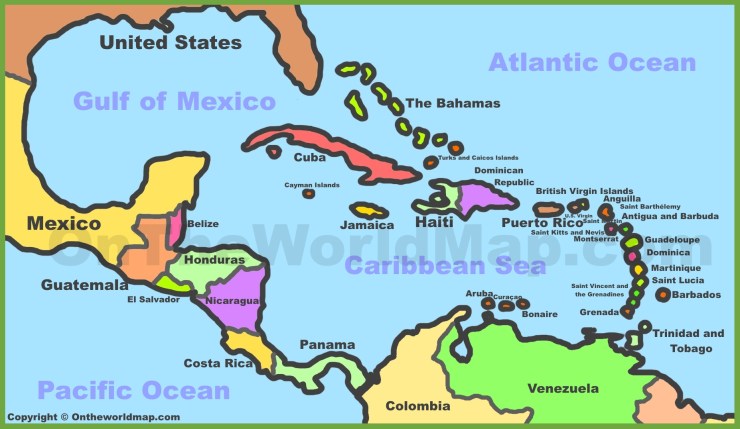
I hope the next confession will bring some changes to this group of Catholics because I believe that the church has a tremendous influence on these issues. This is not limited to Ecuador, Bolivia, Paraguay and other stops on your refocus mission.
Addressing poverty and the environment is always important. However, concerning the plight of many blacks, they cannot only be celebrated on football, baseball, and other professional sports field, and the community that produced these rare stars continues to deteriorate because of their lips and color.

At present, the area is facing issues with corruption, poverty, and crime, leading to numerous impoverished people leaving, which is putting social and economic stability at risk. Yet, many black people still face exploitation and marginalization. Just think about how much worse it is for many of us because of our large nose and thick lips.
Racial homogeneity has created political stability, a high rate of literacy, and overall economic growth in some of these Latin countries, and other places. After singing these hymns, religious leaders should use this moment to continue mobilizing socio-economic and justice issues, emphasizing that many believers are defined by more than just their appearance or skin color.

People should be invited to communion based on their contributions to the community, their shared humanity, and their quest for something new that fosters a peaceful and successful union for all. Then perhaps many of us will once again say, “See you this Sunday at early morning mass.””
 GLOBAL COLLABORATION, EMPOWERMENT, LEADERSHIP, WELLNESS, AND RESILIENCE