
BY R.D Miller
A historic toxic blueprint
Jamaica and several other Caribbean islands under colonial rule and their quest for emancipation have a profound mistrust of their law enforcement system. Research has shown that ongoing conflicts and struggles have been constantly until today.

There are numerous other stories and a foundation of distrust through these blue waters. The Morant Bay Rebellion marked a significant shift in the dynamics between law enforcement and civilians.
Around October 7th, 1865, a disturbance occurred in the court and the individual responsible was summoned to appear before the justices. They were apprehended by the authorities and promptly saved by Paul Bogle. [He is regarded as a National Hero of Jamaica according to historians.
Approximately one hundred and fifty individuals joined him wielding sticks, and proceeded to administer a severe beating to the constabularies. Historians have noted that there was tension leading up to the event, but the turning point occurred after Paul Bogle’s interview.
The officers were once again assaulted and temporarily seized in their attempt to capture Paul Bogle. A pledge was required to ensure that individuals in the community would not be arrested.
The Slavery Society, known for its strong opposition to British rule, played a significant role in fostering a sentiment of distrust towards law enforcement, which has contributed to the prevalent “US vs Them” mentality we see today in many parts of the Caribbean.
Muscle Memory:
Having strong muscle memory is absolutely essential in law enforcement, as it can literally mean the difference between life and death in critical operations.
It appears that some in these communities have encountered a situation where certain parents have influenced their children, resulting in some lingering resentment.
According to many scholars, there have been decades of rebellion and socio-economic failures by rulers and political leaders. Many of whom were allowed to get reelected, and poverty and crime continue.
Regrettably, law enforcement has been unable to effectively address the insults and resentment stemming from these profound wounds. Despite some efforts to shift that narrative, there are still lingering uncertainties about whether anything has genuinely transformed.
The lasting impact of colonialism in Jamaica and other regions, where law enforcement was employed to control and segregate slaves and marginalized individuals, again that resentment continues to be felt today.

The psychological anguish experienced by many during that era, which is often overlooked or denied, has left a legacy of tension, anger, hate, and mistrust that still resonates in our society.
While it is true that some of today’s challenges stem from issues such as community distrust, questionable police actions, abuse of power, lack of accountability, and reported corruption, it is important to consider whether a few individuals should be allowed to hinder a nation’s progress and put public servants at an elevated risk just to serve their communities.
Undoubtedly, the new paradigm that resulted from a fresh approach has aroused debate, with some arguing it is a positive step forward and others seeing it as a band-aid for a grievous wound.
The efforts to raise a new generation of people who are motivated to serve their country for the right reasons while avoiding unfair criticism for their roles as officers are excellent. However, it will not immediately result in the creation of more jobs, lower taxes, climate solutions, or the development of better roads for those who see crime as their only means of survival.
According to reports, Jamaica and a few other Caribbean islands, as well as other poor and developing countries, are among the most dangerous locations in the world.
The Silent Generation
The “silent generation,” which may be subconsciously harboring deep-seated hatred, is like a cancer in many of these communities. The persistent antagonism has been a generational issue. Some people simply cannot let go of the past and will hunt for any excuse to return to it.

Though their concerns are legitimate, they too must play a role to build on what is working and help to fix any shortcomings, even if they do not live on these shores, or tucked away in a gated community. They should stop looking for the perfect, because it cannot continue to be the enemy of good efforts.
These Cohorts are vital to understanding how their formative experiences on these shores, whether technological, economic, and social that influenced their lives.
Experts noted that though we may share divergent views from Traditionalist, 1900 to 1945, Baby Boomers, 1646-1964, Generation X, 1965-1980, their influence plays an important role especially and how many Millennials 1981 and 1996 and Generational Z view the world current’s polarization, inequality, political, socioeconomic divide and uncertainty.
Frankly, some may require counseling for closure and where not even reparation for that dark period in its history can fix.
Wearing multiple hats and without them, then what?
The law enforcement of marriage in Jamaica is a challenging and unpredictable journey. It requires navigating through a range of emotions, from fear to love, and dealing with a mix of respect, hate, distrust, and trust.
It’s a profession that demands hard work and often goes unnoticed, making it a constant reminder of the tough task at hand.
Combating crime remains a contentious roll-call, and it is a public health issue regardless of what party is in power. It is a constant mission that has to be illustrated in a delicate balance between politics, crime control, civilian rights, and rule of law.

They must continue forging relations in the open to show an alternative approach since you can’t shoot your way out of crime.
No matter whether it’s a bag of apples or something else, is bound to have a few spoiled ones. However, it’s disheartening to see how little attention is given when an officer dies in the line of duty.
On the other hand, when criminals are apprehended, it often sparks a flurry of questions as communities grapple with the complex issue of Perception vs Reality.
As we reflect and examine the situation more closely, our intention is not to assign blame, but rather to strive for an improved public safety system.
In fact, a lot of us have personal connections to someone who has served or lost their life in the line of duty.
Reflecting on the past, it appears that the value of fostering meaningful relationships in these communities is sometimes underestimated, leading to increased tension.
It’s important to prioritize more meaningful interactions and not just focus on superficial photo opportunities. Today, that community event might not be specifically for Tony’s dad, but it could be a great opportunity for his generation.
Perhaps one day, he’ll share with his children about the wonderful time he had with an officer. That experience could really stick with a child and potentially change their dad’s negative emotions from before. Community Policing is similar to exercising your right to vote. This should be for the next generation.
It’s quite concerning to witness the lack of attention given to the unfortunate loss of an officer’s life in that region, despite the longstanding tensions that have persisted since colonial times. However, it is evident that there is a significant amount of emphasis and enthusiasm directed towards the apprehension of high-profile criminals and celebrities.
Where can I find the combined video statements made by politicians condemning this kind of violence, which could assist the situation become less violent?
Perhaps more joint statements from all political leaders, influential citizens, and the Twitter journalists that can change the outcome of an election should be more open to condemn these atrocities from the headlines that may change a potential criminal outlook.
Finding the appropriate balance to make sense of it all
Community Policing is a method that fosters trust and respect within society, cultivating a new generation of individuals driven by genuine motives to serve. These diligent officers frequently bore the weight of society’s issues.

They are essential for the functioning of a democratic society and the existence of a nation. Law enforcement plays a crucial role in these communities, and a country relies on their presence.
Without these civil personnel, safety on these shores would be like to a stray dog crossing a busy street at night with oncoming vehicles.
Every day, these dedicated police wear numerous hats, navigating between banana peels, leaping pockets of stagnant water in 100-plus degree weather, managing everything from little thefts to armed robberies, and yes, counselors and mediators, all while preventing violence and assisting victims of crime.
This very day it seems the foggy history of misgiving between the police and its people often led to apprehension from coming forward and speaking up to reduce violence and hold perpetrators accountable.

But the community should not blame law enforcement alone if they have information and remain silent. An officer is someone’s brother, mom, father, an uncle, aunt a cousin.
The debris that lingers across many shores
Jamaica is not alone, other regions of the Caribbean and Latin America are experiencing this struggle to deal with these criminal elements, according to reports.
Sadly, crime has contributed to high unemployment and has caused an ever-widening gap between the rich and poor, and violence become glorified by a selected few.
Crime can take place anywhere and the issue is normally internal, inner-city, and pockets of rural areas, and rarely it touches the millions of visitors, but recent warnings may change travel plans for many.
Crime experts noted that some of the most dangerous islands are Jamaica, St. Kitts and Nevis, Trinidad and Tobago, Bahamas, Haiti, Puerto Rico, and the Dominican Republic and other places have seen an increase.
If 20-year-old Jimmy, who did not complete high school, is currently without a job, owns the latest motor vehicle, and does not have any source of income, resides in the most prestigious neighborhood, and is regarded with apprehension by the residents on the block, but is untouchable.

His lifestyle may become attractive to the hopeless youths. He then uses his influence to recruit young individuals who may be lacking support and guidance, offering them gifts and attention to form his crew.
Unfortunately, if this menace to society remains untouchable despite evidence of wrongdoing, this is one method of how gangs are formed while using a history’s toxicity, with added barbaric ideology, and resentment to create community mayhem.
And if law enforcement struggles met with resistance to order shut down, even a loud music; or illegal drug operations, or scamming, then what type of statement are these communities sending?
More residents must speak up and stop treating lawless criminals who have exploited communities like heroes. It only creates an uneasy feeling for many including visitors outside the protected zones.
With a nation’s delicate economy depend on a sense of safety regardless of what party was in power when the amount of murders spiked, if the absolute disregard for public servants does not take on a more urgent need, soon criminals will start charging their tolls and other extortion.
And then who will be the voice for a high school girl sexually exploited, raped, gone missing, or killed for not complying with criminal demands and her family must stay silent because of fear?
Balancing safety and the socioeconomic dance
Decades ago, few people possessed a firearm on these shores. Usually, a local business owner, security, and law enforcement officers. Today, a grocery store worker, taxi driver, and food stand vendors are armed. Carrying a weapon has become the norm more than job security, economic development, career plan, or youth deterrence programs.

Today, a fight to gain social control in some communities riddled with crime, they are under-developed, lack upward mobility, and where lethal weapons are present in the hands of criminals, law enforcement officers are frequently outgunned and that makes it a risky undertaking.
Many reports have shown leaders have declared “Zone Strategies” to dismantle havens that harbor criminals and gangs linked to an increasing murder rate; some remains unresolved. According to local news reports, the operations identified high “criminal zones” to rid communities of violence. But has it worked as intended?
For decades, pockets of criminals have caused serious public safety concerns. “They display no respect for the rule of law,” a victim argued. “They are carrying out retaliation and fighting over territory with no regard for human lives.
“These targeted communities will be re-introduced once officers vacate this area.” “Some choose to remain silent in fear of being classified as a snitch and later targeted.”
On the other side of the debate, arming more civilians may not be the solution because criminals often will target citizens for their weapons.
Many of these legal gun owners lack the skills to operate these weapons properly. This is where a forensic system to determine if a person has recently handled or fired a weapon is critical.
Forensic evidence in a firearms-related case is key to link a small piece of a bullet fragment mark to provide the manufacturer or marketer information, and I believe this is an area that may require more investments.

Selected town hall meetings and promises alone cannot fix these systematic issues. It is like solving crime with bullets alone, and that represents a losing strategy.
Politics and complexity.
Sadly, many constituency leaders are at excellent winning an election, but governing is more difficult. They are good at an image like they are balancing justice, economic prosperity and developing solutions.
Some may share a similar attitude towards public servants, and studies have shown that not all political leaders share the same approach, but will remain silent.
Often opposing party, despite their previous time in power, seems to have discovered reasons to dissent and not collaborate because of political ideology and indirectly they likewise are victims.
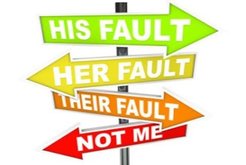
Reducing crime and achieving social reform needs more than legislation and incarceration, and after the camera has departed from the scene of a crime, and a victim receives a hug from an elected official.
It calls for a holistic approach that incorporates, accountability, job opportunities, treatment and rehabilitation, and economic policy that targets these impoverished communities.
It is crucial to ensure that every member of the community is held accountable, regardless of their position in society or status, especially if they are involved in gangs or criminal organizations.
You cannot neglect an area and ask law enforcement to correct it years later.
Today, Jamaica and several other Caribbean islands Constabulary Force operate under an ancient Political Era. A time before the 20th century refers to a period when the police were under the control of politicians according to experts.

These officers were linked to the political machine, operating with less transparency, selectively reporting crimes, and protecting influential groups, which frequently led to corruption and a lack of trust.
This is a form of Colonialism when citizens perceive their primary duty as solely enforcing the law in order to monitor and regulate people’s actions, with minimal focus on solving cases or engaging with the community to foster trust.
The Reform-Era -While many of these communities are going through reported rampant struggles to balance poverty, justice, corruption, and other barriers.
Therefore, they must institute fundamental systematic change because of political strife and color of sabotage and let the police do their work, from recruit, training, and a decentralization of the system according to the experts.
Community Policing Era, which focuses on connecting all stakeholders, embracing other roles; including counselors and social workers as many criminal justice institutions.
Scholars argued this modern concept should be embraced or enforced to a broader extent to build trust and therefore reduce conflicts.
The difficulty many crime fighting leaders face is chronic poverty, political influence, and offenders with substance abuse, mental health issues, and lack of resources to find and maintain a jobs makes it a daunting task.
The success or failures of implementing a new strategy should not be about what party messenger the appointees came from to lead.
The rapid turnover rate of Commissioners in the past is also problematic. Far too often stymies crime-fighting strategies that are already in place. These top positions in the Caribbean; and especially poor and developing countries, is complicated.

Thankfully, amidst the debris, most of the population consists of law-abiding individuals who, like in any other location, are constantly seeking an alteration or a lasting solution.
Any mission to curb violence and lower the chance of becoming a victim endures an auspicious start.
Shifting an old mentality is critical. There has to be significant change like people marching to condemn criminals like when an offer executes a terrible judgment, pastor, guidance counselors, teacher, social workers, youth clubs, politician, and rehabilitated offenders, the “all hands on deck”approach
It is possible if these high crime communities select their safety officials, rather than political appointments, this could create a smoother ride from the ongoing turbulent relationships, and build more trust.
Do some of the more populated areas grappling with high crime need a military presence?
Perhaps consolidating these institutions could be a practical solution to strengthen the law enforcement and reduce expenses.
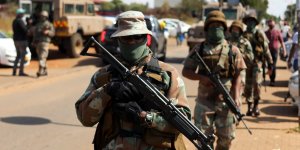
Jamaica and the majority of these islands do not face any border issues with neighboring countries.
It could learn from Costa Rica, which eliminated its military in the late 1940s and invested resources into education, national safety, and general healthcare. As economic scholars have written, it appears to have been a positive return from that strategy.
Sure, some of us do not give a damn from the outside, and thank you in advance for advising us to “butt out” since we have our crime issues.
However, it is not about location or ideology, but safer communities, good economic policies that create change for a better quality of life for all.
Though crime is ubiquitous; for some looking in, if the erosion of safety in these crime-riddled headlines continues on these lovely shores; it is not only a public health issue, but may cause an economic downturn if visitors stayed away from a vacation package, and expatriate goes elsewhere.
Finally, education, training, treatment, community support because you cannot have a society without the safety of its people. And maybe a mental shift-is more effective than a bullet.

Paul Bogle has his resentment, but because he was being oppressed to free a generation from colonial laws. I am hopeful, but it will take a generational shift from its history.
Best Wishes!
 GLOBAL COLLABORATION, EMPOWERMENT, LEADERSHIP, WELLNESS, AND RESILIENCE