BY R.D. MILLER
The unexpected wind that also opened a deep wound
After the hurricane, Dorian landed on Abaco Island on September 1, 2019, and a day later in Grand Bahamas as a category five hurricane with winds of up to 215 miles per hour; the damages amounted to about 3.4 billion, at least 70 deaths, and about 14,000 families displaced according to weather experts.
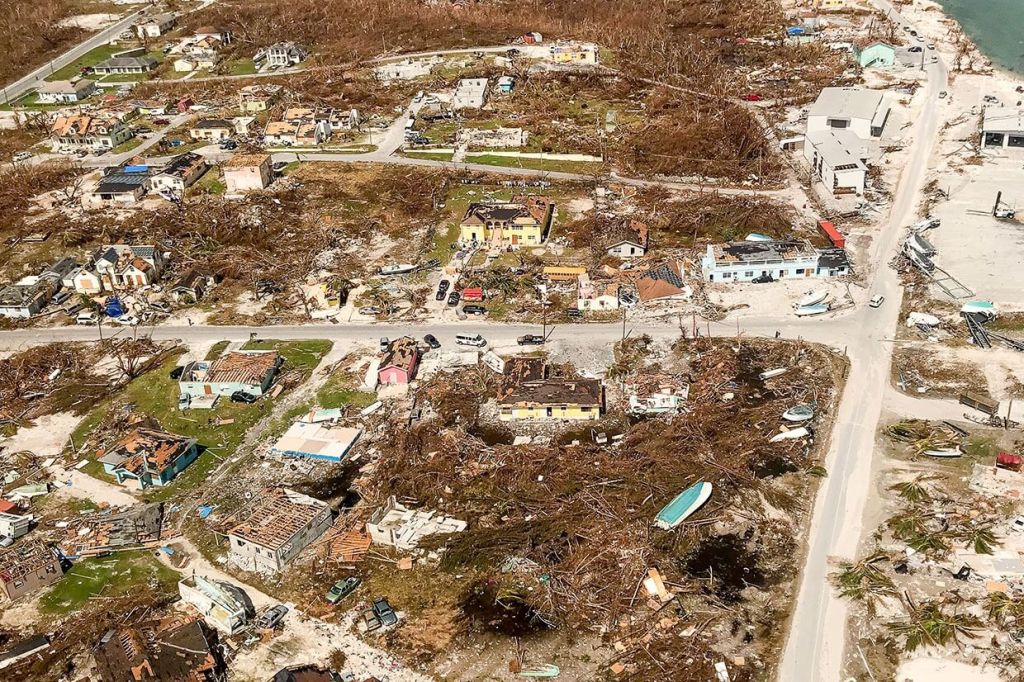
Millions watch helplessly, but with the tenacity of its people and with the help of other nations, The Bahamas is now rebuilding.
Who, what when get rebuild first?
Following a catastrophic event, inquiries are inevitable. Although there are areas for improvement, there is a chance to gain insights from errors related to inadequate planning and enhance environmental management. Regardless of how this paradise is reconstructed, some intangibles cannot be resolved through donations, improved infrastructure, or moving to higher ground.
The hidden debris that washed up with hurricane Dorian’s has brought a gloomy side to the surface on this paradise and exposed unresolved issues in the Caribbean. The complexity of classism, racism, and the social-stratification still roars like high tides reaching its banks.
Even though these islands are close together, they share music, customs, skin tone, culture, beautiful beaches, and food. Arriving by a homemade boat in search of a better life may result in a less welcoming reception compared to those showing up on a cruise ship, or private or public airplanes.
The hidden trash that resurfaced
Some individuals, including those with Caribbean roots, were surprised by the aftermath and have donated to established organizations to help rebuild the island. Yet, a discussion emerged about the most effective way to assist those who are already struggling.
Simply put, after the camera leaves, and the photo-ops are no longer staged, the genuine work and the reality sets in.
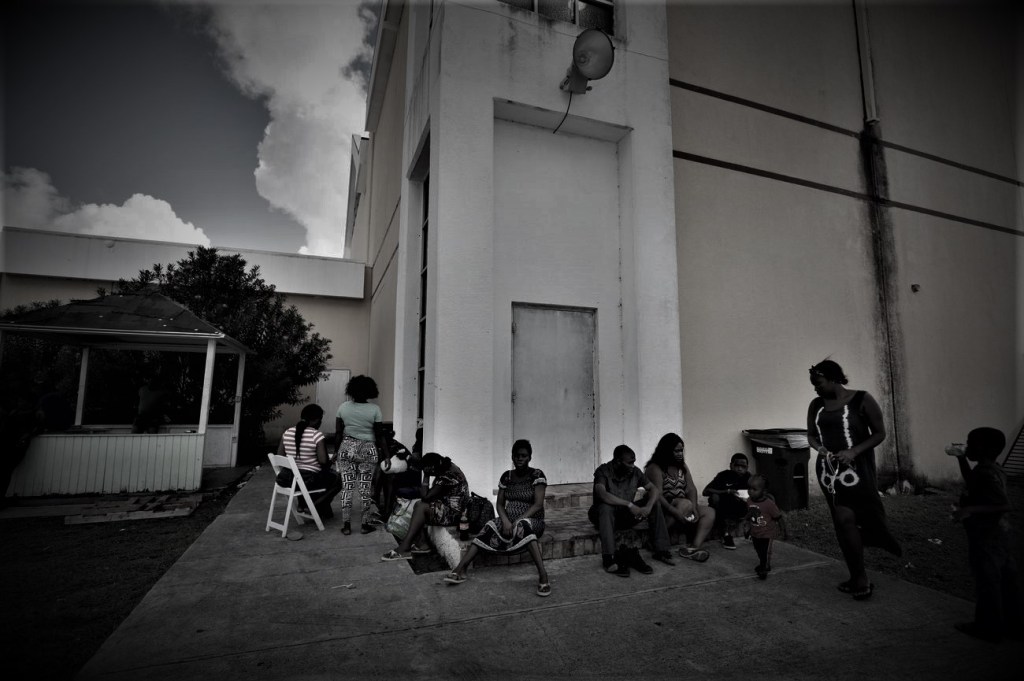
This discussion surrounding migrants, especially Haitians who live on the island, is an undercurrent seldom discussed. They make up about 20 percent of the population in some areas, according to reports.
After Dorian, some believed that leaders treated them less than humans, not worthy of being counted for aid or basic support like food, water, or shelter. Many Haitians who came ashore in The Bahamas have had their share of catastrophes, from poor governance to crime and natural disasters.
Exodus for a more quality standard of living carried the risk on the ocean. Some often never make it to The Bahamas and other Caribbean islands.
Stories like these seldom receive media attention of an unwelcome mat on the white sands for many neighbors who made it to shore. These stories are like migrants fleeing parts of North Africa to the coast of France, Italy, and Germany. Often as it appears leaders are struggling, to manage migrants inflow, and any immigration violation(s), as one noted, leaders and enforcement remains an open question.
Beneath the sunshine, broad smiles, and an inviting ocean, if you planned to stay beyond spending your tourist dollars; or are not able to fill a financial void locally, it is time to go. Most of these Caribbean islands’ immigration laws; even getting a work permit sometimes is more difficult than in many industrial countries.
Being part of the CARICOM community that was built on integration and cooperation among each other, like the European Union where its members can travel, work, and live and study with access to health care. In the Caribbean, this policy appears to only be on paper.
Some migrants’ when they arrive in The Bahama’s, and other places in the Caribbean, immediate exclusions have created tension and distrust. They are often relegated, marginalized; coupled with social isolation woven from cynicism and protectionism as leaders and many locals are still searching for the right balance.
Amalgamation can be slow where some found themselves in areas known today, as the hood; but in the Caribbean, better known as the shanty towns. This hierarchy of class systems can be just as cruel as racial segregation seen elsewhere.
Indisputable though, they must maintain the rule of law as some argued that when they arrive, there is an uptick in crime. Sure, local leaders have the responsibility to protect their country from additional financial burden, crime and overcrowding for the smaller islands.
The historic waves beyond The Bahamas
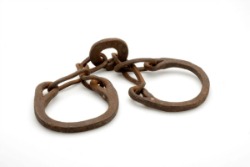
Colonial slave ships have once docked on these waters where their ancestors were exploited, whether to produce sugar, coffee, spices, and other crops, centuries later that connection should have created more acceptance, but the struggle to see themselves as one lingers.
Before Dorian, most of the region from history came to accept that the ongoing fog of Christopher Columbus since 1492 and later British rule in 1717, to independence in 1973. However, struggles remain to emancipate mentally from that period, despite today’s diversity, which makes this island and others unique.
I am not a historian on The Bahamas open economy to business investments, robust tourism, strong financial management, politics, immigration policies, competitive ranking, foreign investments, travel, crime rate, corruption index, taxation or status of women mobility, but these social nets must be addressed.
Today, with over 80 percent of blacks who made up The Bahamas island population, there is still a wide gap in the lack of business ownership, as if it is the ancient colonial period, but this is not a history paper on cultural divides, inequality, poverty that has led to some industrialized nations widen gaps between the have vs, the have-nots.
Beyond the Caribbean coastlines
Dorian debris is beyond The Bahamas. Various experts have also seen similar patterns of marginalization in parts of Latin America, even Brazil.
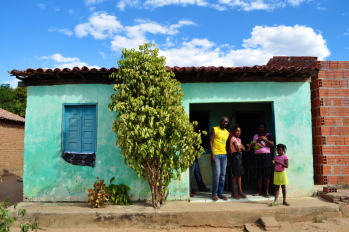
Many reports show that if black Brazilians could get on a boat and leave they would because out of 2019 studies, blacks are killed at an alarming rate in addition to the economic stagnation. Even when crimes overall dropped, the number of violent deaths recorded, in comparison, the murder rate of black people has not decreased.
In addition, it is worth noting that this pattern is not confined to a single location where a significant number of black individuals were brought in as slaves. Experts have observed that following the abolition of slavery in 1854, black individuals are noticeably underrepresented in Peru’s business and political elite. The majority of them work on sugar cane plantations located along the Pacific coast of the country. A small percentage of Peru’s black population pursues higher education.
In Lima, Peru, there is a tradition where pallbearers are black and native; some argue it is simply employment, but others see it as racism, and only those job opportunities are for blacks.

Sexism and classism are significant factors that hinder upward mobility for women in various parts of the Caribbean. It is often attributed to the historical mistreatment of black individuals, particularly women, over the course of centuries.
Regrettably, it appears that this has become the standard despite advancements in upward mobility during since that period. Some individuals, including those in leadership and powerful positions, seem to be oblivious to these social issues, making it difficult to even acknowledge the existence of them.
What’s next:
During my travels to the regions and elsewhere, I have seen marginalization against other groups, but sometimes a disaster is an opportunity to change course.
Haitians and other migrants will continue to search for stability in The Bahamas and other places. The argument is that migrants taking native jobs, husbands, wives, and contributing to the uptick in crimes may be a topic for a good debate.
Regardless of how many husbands and wives when natives hire migrants as domestic aides; economists argued that even in industrial countries, migrants do not take away native jobs. They carry out jobs where natives will not, and these service jobs are vital to the local economy.
Dorian has uncovered a systematic problem throughout the region born out of social stratification that will not end with donations. They have contributed millions to rebuild The Bahamas. And while few will move to a better location and higher grounds; hate, polarization, and self-interest will remain.

National safety is vital, and if migrants commit crimes, they ought to be held accountable swiftly. They, too, like other islands have challenges in drug trafficking and illegal immigration according to experts, but socioeconomic divide and isolation as studies have shown may cause a struggle to solve some crimes, if migrants only see public safety officials as part of their problems.
The next hurricane will not consider what group they should count, but will all be prepared, and survive since its wind will not dictate who lives where.
No need to panic, the sun will rise again, but all the old trash must dispose.
These islands, after a century of being told what to do, are still going through modernization to find a good balance to reduce the gap between the have vs the have-nots. Sure, those who sit on the sidelines looking in will get push back that it is all well here, and you have your issues.
The Bahamas is still one of the safest places to live, invest and visit in the region, and they equip its leaders to handle its affairs, but it can only get better when you move all its socioeconomic debris together.
Despite the task forwards, The Bahamas will rise again. More tourists will arrive, but I hope that they will use this opportunity to be more inclusive while remaining one of the safest and more attractive places in the region where people want to live and retire.
No, only the Bahamas still needs your support, but other island in the region; and that infectious smile will continue to say; how may I help you, rather than go back to your country or be treated less than?

Tolerance will be the key to success in this new world economy. We all cannot be the same because life would be boring. Let us kill ignorance, narrow-mindedness mentality, and embrace each other to grow.”
 GLOBAL COLLABORATION, EMPOWERMENT, LEADERSHIP, WELLNESS, AND RESILIENCE