
BY R.D. MILLER
The announcement
Countries around the world occasionally introduce rules and regulations that are associated with other nations. Some may not fit all backgrounds from various cultures and traditions.

Many developed countries share basic principles for commonly agreed-upon approaches to similar problems. For instance, these principles are commonly applied in the fight against drugs, crime, and environmental issues.
On February 8, 2020, Robert Nesta Morgan, parliamentary secretary in the office of the Jamaican prime minister, announced that an incentive plan, offering students the opportunity to have their debts forgiven for public service work, was either in place or under development. It is one of the best imported policies to arrive at these shores in a while..
Potential impact
A previous opinion, “The Brain Drain of the Caribbean Nurses,” highlighted concerns in the medical field surrounding lack of resources, patients’ lives, staff safety, job protection, wages, and failure by leaders.

As a result, many experienced, well-trained nurses leave the region once they receive their nursing degree to work elsewhere, but overall, student loan debt was one of the major driving forces.
A few times my telephone rang from friends I had encountered while in the region, which informed me they had migrated with their families.
And when I asked, “Why on that side of town?” the response was, “My wife is working as a nurse.” It is remote; there is one major department store that carries everything. I miss home, but it will relieve her financial burden.”
Their story is one of many across the Caribbean region of residence leaving for Canada, England, the US, and even other Caribbean islands.
Other poverty-stricken and developing countries that may not currently provide this incentive should implement and adopt this student loan proposal.
Maybe it is beyond politics
Regardless of the political party, student loans support many people to attend college, graduate, and attain a degree for a more promising long-term future and, overall, the nation’s economic stability.
While the proposal is a positive step, the funding details remain unclear, making it difficult to summarize in a few tweets. However, like other countries that participate in this program, there are requirements and commitments for individuals to be involved.
In the long run, we anticipate that this program benefits everyone and does not serve as a mere election talking point to garner votes. Prior to the previous elections, there were reports of free healthcare. However, after tabulating the votes, many argue that they are still waiting for bed space and the results of the free test.

But if everything goes according to plan, this program could offer many students who are still figuring out their career path a strong foundation and an alternative in public service.
Additionally, the social media responses after the announcement appeared to be tremendous, but who will hold these leaders accountable?
Many students on these shores will benefit from loan burdens, and their appetite for waiting to leave may change if an opportunity presents itself to migrate. However, it requires a genuine debate, accountability, and implementation beyond likes on social media.
Student loan debt burden reality
Evidence shows that student debt jeopardizes the financial wealth of many households and the economy in the long run, not only in the Caribbean but also in other countries.
This debt burden has also contributed to the black-white wealth gap across the wealth distribution. Other studies have shown that about two in five households now owe student loans, and that number is increasing.
A person with about $45,000–53,000 in educational debt can suffer a lifetime wealth loss of around $215,000. This also affects one’s retirement, long-term savings, and lower home equity, according to academic experts.

Student debt has surpassed $1 trillion in the US, and the delinquency rate has increased to over 50 percent.
These studies also showed the suicide rate in the United States rose to the highest levels in more than a decade. I do not know if most of these suicides are 100 percent related, but others noted the negative impact for individuals between ages 20 and 31.
Crunching the numbers before you apply
Understanding student loans is extremely important, like financial literacy. It informs individuals to avoid the predatory lending trap, unsolicited credit cards, and investment strategies.
It is crucial to monitor re-payments to guarantee timely forgiveness, given that other programs have faced lawsuits for denial of eligibility.
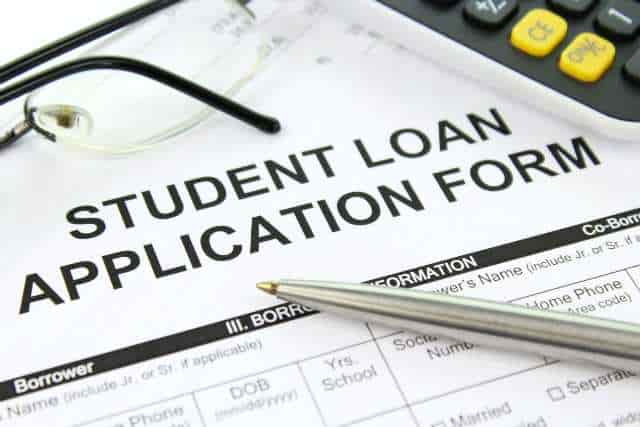
But I will leave that to the local experts to continue raising awareness.
Going forward, school officials should be responsible and encourage students to maximize all options, including scholarships, grants, and aids, before taking out loans and provide career counseling suitable for gaining employment after graduation.
Understanding fine prints can help reduce potential problems.
Household size, marital status, income levels, and work status can all influence these loans; therefore, differentiating traditional loan repayments according to this income base will be important.
Students should recognize how the symmetry will work between traditional banks and government loans, but for now, it is a key step forward if created for the correct reason.
For example, Minister of Foreign Affairs and Foreign Trade, Senator Kamina Johnson Smith, tweeted that this is a great idea worth exploring!
Should we allocate 50 percent, 100 percent, or 10 years? Police with forensic and cyber capacities, nurses with critical care, teachers (esp. STEM)—is this something that would be part of the bi-national commission to discuss? Or examined separately.”
I believe her conversation was extremely significant and does not alter the fact that they also use these loans for tuition, books, and supplies, as well as ongoing expenses.
It does not define one hope that this new loan forgiveness will affect one’s degree, but rather an incentive to attract and keep the best and brightest. It is like a private corporation giving you a bonus stock option or a reward for your work upfront.
This application should not create other social stratification about what jobs are more important to consider. Attracting and keeping the right workforce will be an economic win-win for the nation. Civic service should be the common denominator.
Tyrone ensures the cleanliness of your water and the daily collection of trash; Susie manages your property tax; and Nadine, who once pursued a degree in agriculture and continues to repay her loans, now finds herself jobless due to the closure of her factory.

However, she has a passion for cooking and now prepares your child’s lunch at the primary school. They are also government workers.
Your commitment
These loan incentives were first developed by officials to compete with the private sector to attract and retain the brightest.
It is more than likely that your civil service career will not make one extremely wealthy, as these public service positions often like being a law enforcement officer that is put in a position of authority.
They must dedicate one, physical and mentally fit, where pride and sense of duty dictate success or failure. It is a career that helps to maintain a quality standard of living and has a smooth retirement package (hopefully).
For one, there has been a massive increase in government spending globally, but looking in, I hope this one is beyond Twitter and an incentive only for votes because these students will benefit tremendously.
Finally, before you pick that academic institution to build your dream career, this is a candid conversation potential students should have with their families because far too often, retired parents are left to carry the burden, just wanting to perceive their children as having a chance at being successful, and one should not eliminate a good idea even if you have an ideological difference with the messenger.

The strength of a nation is the ability for the next generation to feel both safe and secure, both socioeconomically, and that they have a shot at fulfilling their dream and making a vital contribution for the next generation to take it further.
It’s similar to any technological software, but how can it progress and improve without adequate resources? This extends beyond politics in the long run.
 GLOBAL COLLABORATION, EMPOWERMENT, LEADERSHIP, WELLNESS, AND RESILIENCE