
BY R.D.
Part I
The unexpected recognition
“First, they ignore you, then they laugh at you, then they fight you, then you win,” Mahatma Gandhi.
On Monday, April 5, 2021, the Jamaica Observer reported that “Minister of Security Dr. Horace Chang claims that if more people replicate the respect that “genuine” Rastafarian men show to females, it will reduce recently reported heinous acts of violence against women.”

The recognition of Rastafarians as symbols of peace, safety, self-sufficiency, or humanism was a meaningful gesture.
For the Jamaican government’s acknowledgement and or elsewhere, this overdue gesture falls short publicly. However, it could initiate a crucial discussion about this long-ignored culture.
According to reports, Antigua and Barbuda West Indies also expressed regret for the long-standing hostility and exclusion of this culture in the Americas during a speech in 2019.
In many communities they share, there has been a persistent and unwavering pursuit for complete and ongoing unity. This pursuit has been ongoing for decades, with the aim of achieving full recognition, respect, and understanding without reservation.
From an outsider’s perspective, you may not be familiar with this culture, but it encompasses much more than just “One Love,” ganja, weed, or marijuana, music, depending on how you’ve come to know it.
Many locals concluded that the administration had run out of public safety options in dealing with the rising crime rate and other issues that social media clips and repeated promises could not address.
Others maintained that it was long past time to recognize their way of life as a model for reducing public safety concerns.
Even though this acknowledgement could have a domino effect and appeared to be welcomed news, it falls short on many fronts in terms of what needs to happen next to open the doors for upward mobility in this culture.
It did not mean that Rastafarians (Rasta) would take a more active communal role in a task force dedicated to violence prevention, socioeconomic upward mobility, especially for the poor, one of the movement’s foundations, or any other safety measures that many communities need.
What next, and who holds the key to a seat at the table.
Over the course of several decades, there has been limited advancement in terms of increased political engagement of the Rastafarian community. I, along with numerous individuals, started contemplating the following question: with the persistent challenges faced by the country as a whole, what lies ahead?

Sure, many will argue that things are good, but it seems that only the well-connected benefit as studies have shown that politicians are among the wealthiest in the Caribbean and, to a large extent, in many poor and developing countries.
For decades, the Rastafarian culture has persisted, and beneath the locks and systematic isolation, they have been a force in the arts, medicine, and academia, making significant contributions to our society.
Rastafarian movement culture and context are more than just growing dreadlocks or smoking marijuana. Today, their peace-making practices may be the most effective way to calm these turbulent seas.
Is it time for a Rasta to run for the highest post in Jamaica, as well as other Caribbean countries, maybe CARICOM, and other challenging countries beset by violence and economic stagnation?

According to accounts, political domination on these shores typically boils down to having the financial resources to promote their campaigns and, if elected, being beholden to the biggest bidder, but Ras, I believe, will simply look to the community for guidance.
Furthermore, regardless of which side of the issue you are on, they can undoubtedly provide another road to socioeconomic growth and crime reduction for all people, particularly the disadvantaged.
Unfortunately, the reported spike in violent headlines appears to highlight that the Rastafarian way of life, love for people, and peace can be a pattern for change.
The inclusion of Rastafarian culture in an economic upward mobility panel is crucial because the relationship between poverty, social division, safety, love, and unity will lead to less criminal activity and community breakdown.
Given the chaos of today, where every day feels like an election campaign, what advice would Ras offer?
During these elections cycles, a plethora of opportunities arise, ranging from the construction of new roads, to the provision of small handouts, leaving many voters uncertain about their next steps until the next polling booth. Nevertheless, I will try to make a case amidst all the cycle of noise.
Beyond the dreadlocks, there is a reality.
Equally ubiquitous as those annoying high tides in the ocean are poverty and inequality and violence. Experts argue that corruption, social injustice, and a plethora of failed economic policies have occurred all across the world, especially in many underdeveloped nations.

Photo by lyncoln Miller
Both sides accuse each other of being less corrupt, yet poverty persists in these communities without any clear economic guidance.
Some argue that instead of working together to assist students and uplift people out of poverty, each cycle has its own set of protagonists on both sides. In the end, the key point is to determine which individual is least affected by corruption and who is responsible for starting the ongoing systemic problem.
In today’s world, it appears that every newly elected leader, irrespective of their political affiliation, tends to attribute the lack of progress to the previous administration, even after assuming office for several years.
For decades, economic insecurity has left these neighborhoods exposed to crime and contributing to brain drain throughout the nation. The working class continues to be battered like waves, scrambling for an anchor.
Furthermore, many people continue to struggle as a result of unemployment, underemployment, and other social challenges like mental health and substance abuse.
These issues greatly widened the gap between the privileged and the underprivileged, exacerbating the disparity.
Many scholars have pointed out that the only consistent gains appear to benefit the leaders who become financially wealthy, while the oppressed future remains stagnant day by day.
Should Ras transition into leadership to usher in a fresh approach to governance, with a new wave of leaders dedicated to inclusivity, peace, and economic prosperity for all?
Despite the political interpretation of the public announcement, I perceive it as an act to raise awareness. For instance, we should applaud an increase in awareness of domestic abuse, public safety in general, tolerance, or equality, regardless of the messenger.
Recognizing Rastafarianism, however, requires more than just a brief statement in a tweet, public relations, or a sound bite. There needs to be a fundamental shift in the paradigm to promote greater inclusion at the highest level.
These platforms have the potential to inspire and empower both youth and members of the Rastafarian community.
It can also help them improve their relationship with the public, build a dedication to, and actively pursue greater success and tolerance on issues that are in the best interests of future generations.
Despite Rastafarians’ popularity, many people who wear natural hair on these islands and even outside of Jamaica often still face discrimination.

Part II
After a century of fighting and struggle, a quick trip to Ras’s house
I am not a philosopher, nor am I attempting to explain the origins of my opinion, but I kindly request that you remove your hand from their hairstyle and take your foot off the man’s neck.
According to scholars, Rastafarians in Jamaica started advocating for the authority of Selassie’s teachings over King George V in the mid-1930s, right after Ras Tafari’s inauguration as Ethiopia’s Negus, or “King of Kings.”.
Jamaica was formerly an English colony, and the movements faced enormous resistance, according to scholars.
In the 1940s and 1950s, many branches were established, led by Leonard Howell, a former member of Garvey’s Universal Negro Improvement Association who was imprisoned for preaching its culture.
Unfortunately, reports indicated that the Jamaican government viewed Rastafarian ideology as dangerous, subversive, and a threat to social norms at the time.
Many individuals were marginalized instead of being recognized as determined and valuable citizens connected to the same slave ship. Consequently, individuals experienced increased isolation from educational opportunities, job prospects, access to land, and housing.
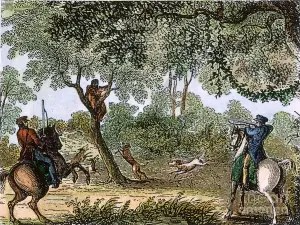
Rastafarians were often regarded as deviants by many in leadership, who saw them as slaves from another planet. Cultural isolation has historically fostered an oppressive mindset, leading to increased tension and mistrust in authority.
For over a century, they have faced social exclusion in the Caribbean and other regions of the world. This was primarily because they resisted imperial power and refused to accept marginalization.
Research suggests that Rasta played a significant role in raising awareness about the suffering of black individuals, with the ultimate goal of liberating them from slavery and neocolonial oppression, ultimately leading them back to Africa.
Unlike Paul Bogle, a Jamaican national hero who fought for liberty, equality, and justice during the Morant Bay Uprising on October 11, 1865, these movements did not use violence to achieve equality and freedom. Bogle bravely challenged police enforcement under a colonial administration.
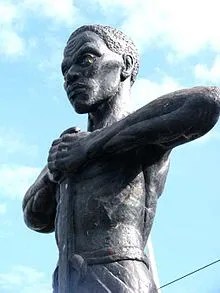
Paul Bogle (1820 – 24 October 1865
Many individuals worldwide fought for equality, and many have died, went to prison, and abused. I was inspired by American statesman and civil rights leader John Robert Lewis. He was Georgia’s 5th congressional district representative from 1987 to 2020.
He tirelessly opposed segregation from the 1880s until the 1960s, especially “Jim Crow” laws. He was dedicated to positive change and confronting unfair systems, calling it “good trouble.”
Today, Rasterfreian movements are crucial to the fight for equality. This is shown by Paul Bogle’s 1865 revolt.
Undoubtedly, altering the deeply entrenched mentality of social segregation that has endured for years would be a formidable undertaking.
To attain absolute autonomy especially from colonial rule, it is imperative to adopt a fundamental alteration in mindset, which is also crucial in moving forward
The struggle for mental shifts and the drumbeat of equality continue to this day.
The foot on the Rastafarian culture, as I have noted, is not simply an outward image but also a mental ideology by some, as shown in a reported “British Insignia.”
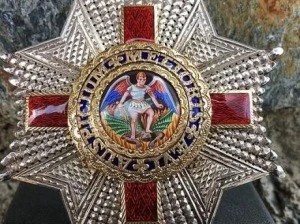
Many individuals found it offensive, not just to the Rastafarian culture but also to the general population and dignitaries, including those who may have proudly worn this emblem without taking a closer look.
Some of these local leaders may not have even looked at what they were wearing since they were so concerned with their image, but it’s never too late to make a mental adjustment.
Unfortunately, some institutions across the region still operate in the manner of a scene from George Orwell’s best-known novel, 1984: Animal Farm: “All are equal, but some are more.”
Today, history seems to have overlooked the humiliation and treatment of Rastafarians on these shores and in other places, where they have endured a decade of resentment.
Unfortunately, full acceptance of the architectural class system necessitates a mental shift back to the classroom.
Some argue that there is a rationale for keeping them as outcasts—not because of what they know and can contribute to society, but because of their outward appearance.
According to sources, the Supreme Court of Jamaica ruled in July 2020 that a student may not attend school unless her dreadlocks are trimmed.

It appears that many Rastas, as they are commonly known, feel the need to showcase their intelligence through excessive talking, often overshadowed by their distinctive dreadlocks.
Many argue that this decision serves to maintain the class structure, which affects public trust.
Some sources claim that even Karl Samuda, the education minister at the time, refrained from commenting on the verdict, which took place on the eve of Emancipation Day, a day Jamaica and other countries honor to commemorate the abolition of slavery in the British Empire.
Taking a step back and feeling the Rasta vibes:
Regrettably, there is a pressing need for increased recognition. However, it is challenging to determine where to begin when the majority of these islands are unable to reach a consensus on reparations, let alone develop an economic package for the future generation that encompasses education, employment opportunities, and overall social mobility.

Rastafarians have long been recognized as advocates for social equality, peace, brotherhood, environmental preservation, liberty, resistance, independence, and universal love.
They have played a crucial role in advocating for the cause of impoverished, black-oppressed Jamaicans and other marginalized communities worldwide.
Although there are ongoing cultural challenges in the local context, it is clear that Rastafarianism is a complex movement that connects with people from various backgrounds.
People from all walks of life, regardless of race, sex, religion, political views, or economic status, are drawn to its passionate energy and values of peace and harmony.
Since the 18th century, Rastafarianism has made significant progress, with Ethiopians placing great emphasis on an idealized Africa. Later, the music of the devoted Rastafarian Bob Marley and other individuals he influenced led to its global recognition.
Morgan Heritage, of the reggae band, said in one of his songs, “You don’t hiffi dread to be Rasta.”
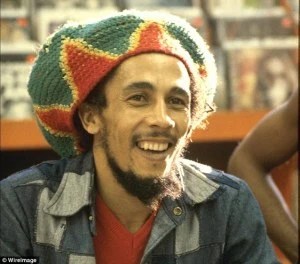
Bob Marley
Even though some of us have given in to razors or barbershops, we don’t rock dreads because we live in a world that has certain rules we’ve reluctantly agreed to in order to keep our finances in check. But deep down, we’re all about that Rasta mindset—embracing peace, love, and humility.
A circle of warmth and courtesy:
Regardless of the political and economic climate, people’s experiences can vary greatly depending on their status or political affiliation.
While some may perceive it as a beautiful, sunny day, others might experience constant rain, preventing them from enjoying the outdoors.
Nevertheless, it is crucial to acknowledge that these debates hold significant value for democracy on all fronts. However, achieving a collective consciousness to uplift individuals from poverty and combat crime and corruption continues to be a challenging endeavor.
Therefore, it’s possible that only a highly skilled individual can manage these problems, ensuring that everyone in the circle gets an opportunity to participate.
A visit to one of their locations truly demonstrates their remarkable determination, resilience, and unwavering commitment in challenging circumstances where many would have given up.
Rasta will greet you when you arrive at his or her home. You don’t need to look around because a sense of respect, hospitality, and calm has washed over you.

There are many stories about the exceptional comfort of the accommodations they offer, whether for a long or short stay on these shores.
Furthermore, by promoting peace and love, their way of life can have a greater impact on regions afflicted by socioeconomic hardship, political dogma, and violence.The data provided could be of great value to the Rastafarian leadership.
Rastafarians display a diverse array of abilities, qualifications, dispositions, and competencies, all of which make them prepared to create a positive impact.
Beyond the steps of Ras’s small village, reality still lurks.
Violence is a prevalent issue in the region, and it poses a significant public health concern.
Reports have shown for more than a decade that a few Caribbean islands, including several poor and developing nations, are among the ten most violent, with an average of more than 30 deaths per 100,000 citizens.
It is of utmost importance for RAS to receive reports of violence in order to effectively tackle issues such as domestic violence, robbery, murder, and corruption. RAS can effectively address these problems with the support of the community.

This culture’s usefulness and its potential to alleviate some of the systemic problems that afflict these distressed countries are noteworthy.
The next politician, doctor, police officer, teacher, counselor, or investment banker may benefit from their skills if the government invests more in this community.
Just like any other place on earth, it’s pretty clear that wherever Rasta people are, there’s always going to be some chill vibes and peace.
Here’s another way to look at it: let’s compare the number of Rastafarians with criminal records or who are behind bars to their overall population.
The complexities of politics, law, culture, and economic status often entwine in addressing crime and other social-economic issues. Reports indicate that the recidivism rate among incarcerated Rastas is lower.
PART III
Welcome Honorable Prime Minister, Ras!
What might the Right Honorable Prime Minister (Ras administration) look like?
I intend to highlight Rasta’s initial 100 days on the job, at the very least.
It’s hard to say if the Honorable Prime Minister (Ras) can quickly address the effects of poverty, social disadvantage, and oppression, but it’s worth giving them an opportunity to see what they can achieve.

According to economic data, foreign investments and imports have played a crucial role in generating a substantial number of local jobs along these coasts.
However, there is growing concern regarding the decline of locally produced goods and agricultural products, as they are increasingly replaced by imported processed foods.
Numerous experts have raised concerns regarding the potential long-term health implications for communities.
Should these islands hope to soon be able to say, “Welcome First Lady Queen, someone like “Ifrica,” to the Nyabinghi Mansion, which serves all communities?”

Photo by Junny Sema
What might Prime Minister RAS’ agricultural legislation look like today?
I have a feeling the Rasta administration will go for a grassroots approach, promoting local production and bringing back more self-sufficiency.
In order to eliminate bias and corruption and promote diversity and public safety, a diverse board that represents everyone at the table, from the farmer to the sanitation worker, is a top priority.
Many people doubt that Haile Selassie’s divinity or a black figure of God will replace what is already prevalent in many local churches, but there will be an increase in social consciousness.
Their narrative of change will be consistent with their agenda, rather than simply exploiting popular sound bites to win elections.
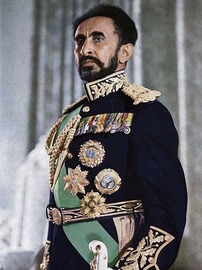
Haile Selassie I was Emperor of Ethiopia from 1930 to 1974. Photo Credit: Wikipedia
Many politicians continue to view the “reparation” discussion through a financial lens.
Prime Minister Ras’ strategy may not be about bank account size but about a mental shift away from despair, criminality, and women’s upward mobility.
By promoting peace and prosperity, honesty, stability, tranquility for all, and respect for humanity, we will once again make the land holy, preserving not only life but also economic progress.
Indeed, the movements were already in existence and flourishing prior to August 20, 2012, when artist Snoop Dog decided to adopt the name Snoop Lion as a result of his fascination with Rastafarianism.
In truth, there have been stories of positive developments in technology and infrastructure. However, it is important to consider who reaps the benefits of these advancements.
I am confident that when an election approaches and everything appears plausible, Ras will pose a thought-provoking question throughout its leadership:
Do you find yourself living a more fulfilling life and experiencing a greater sense of security today?
Are you better off today, mentally, financially, emotionally, and yes, feel safer?

Ultimately, leaders should be dedicated to serving and representing the people, and this is a matter that deserves careful consideration.
 GLOBAL COLLABORATION, EMPOWERMENT, LEADERSHIP, WELLNESS, AND RESILIENCE
Pingback: Is it time for a Rastafarian PM for Jamaica or the Caribbean? | Caribbean News Now!