BY R.D.
It all depends on what you’re looking at.
The erosion of the Caribbean landscape due to violence and economic uncertainty is causing growing concern among locals, visitors, and expatriates, prompting them to take a moment to reflect.
For certain leaders, especially those who rely on their popularity, it’s quite a juggling act.

They have to navigate through challenges like soaring inflation, political alliances within the community, tribal politics, skyrocketing unemployment rates, public safety concerns, inequality, poverty, and other essential social services that are crucial for progress.
As a few of the wise individuals, many of whom have relocated and may be considering coming back to savor the rewards of their hard work, observed. “It’s absolutely striking how, in the midst of an election cycle, the realm of possibilities expands exponentially.”
“There is certainly no shortage of cash, and plenty of unfulfilled promises from leaders seem to go unnoticed.
It’s interesting how both sides use carefully selected photos to rile up their respective communities, but unfortunately, this often leads to even more division, just like in many other places.
Following an election, communities are left contemplating the future in terms of safety and progress until the next election looms on the horizon. Where have all the elected officials been who should have realized that once the votes are counted, governance is for all?
Violent crime against humanity shows no mercy, targeting individuals from all walks of life. It doesn’t matter if you’re a member of the clergy, a woman, a child, a counselor, a law enforcement officer, a teacher, a sports icon, a businessperson, a student, an elder, or just an average faithful worker. It spares no one in its path.
Experiencing violence, whether it’s due to heritage, culture, family, a friend, or love, can leave lasting psychological effects, no matter where you come from, your race, gender, or economic status.

These difficulties require a fundamental paradigm shift through education, resources, and a long-term economic and public safety strategy, rather than a short remedy to deflect via a Twitter post or to fill a talking point until the next election cycle, in the absence of a comprehensive strategy.
The Caribbean islands, particularly the dominant ones, and a few Latin countries cannot claim that an increase in crime and economic decay is the result of an erosion of democracy or an influx of migrants, cultural transformations, or weapons, as reported.
The truth is that many of those who came to these other shores fled or migrated from comparable violent and economic challenges in quest of a better way of life, and they will be permanently linked to the slave ship that was previously anchored there.
The evidence is no longer filed in the backroom closed files.
For decades, the death toll on some of these Caribbean islands has consistently exceeded the number of calendar days and has been extremely high in comparison to the population.

Murders, robberies, assaults, rape, and kidnappings have plagued several communities known for their laid-back vibes and brilliant sunsets reflecting off the green mountains and the blue ocean. These challenges will make many citizens concerned and dissatisfied towards any notion of progress.
It appears that impoverished neighborhoods are being hit with both criminal and political blows, much like an ocean without a levee to keep the water from overflowing.
Many treasured intimate community associations have eroded, retirement plans have been uprooted, or people have become more isolated, even scattered for safety reasons.
Although there appears to be a lack of new policies being implemented to tackle these problems, it seems that everything is being perceived from a political perspective.
Simply replacing the law enforcement personnel will not have an impact if the attitude remains unchanged. It is a circumstance that is simultaneously praised and mocked, even though they all shop at the same nearby markets.
Attempting to downplay or establish a connection with other societies does not alleviate these problems. Likewise, using catchy phrases and showing empathy selectively does not provide the necessary assistance and resources to victims who require support for addressing ongoing public safety and socioeconomic difficulties.
These victims, particularly women and other vulnerable groups, cannot be relieved of their fear and anxiety through the use of pepper spray, condensed social activities, and abnormal living conditions with more steel bars in their homes.
In the past, leaders may had the knack for presenting information about crime data, the impact on victims, and cases that were resolved from their unique perspective. In today’s world, the media wields significant influence in shaping electoral outcomes.
Fortunately, individuals possess the knack for capturing and disseminating their skepticism and dissatisfaction towards their leaders, along with their exasperation over the deterioration of their communities, including unfortunate events, in the blink of an eye.
These survivors are cleverly sharing their stories to present an alternative perspective of reality that sidesteps any inconsistencies, differences, or downplaying.
A gunshot or knife wound to the torso eliminates any doubt about the cause of death. Where other deaths leave questions unanswered: Is it cancer, COVID-19, surgeon negligence, lack of oxygen, diabetes, or a long wait for critical medical care?
Conspicuous fight for safety and economic equilibrium
Finger-pointing often takes precedence over effective strategies in the complex web that entangles the delicate balance between personal freedom, security, innovative crime-fighting methods, and an economic foundation for progress.

Opposition frequently confronts each new strategy, and the debate continues over which party is better prepared to address these public health or economic issues. Many leadership positions appear to be built on connections and lack the expertise and abilities to deal with these difficult situations.
For decades, criticizing the previous administration was the only way to win or lose many elections in these areas. People have likened the peaceful transfer of power to a contact sport with constant exchanges.
After the final political whistle is blown; before the next season begins, the unsuccessful players appear to be sidelined, but often still in the game.
The hold on power in numerous interconnected communities, especially in less developed and developing countries, resembles a never-ending cycle with no way out.
Many of these socially wounded leaders resurfaced under a variety of titles and networks of the well-connected.

With each newly appointed public safety official, top security personnel, and pledges to reduce crime, improve safety, and promote economic growth to lift people out of poverty, the communities that voted them into office are still scratching their heads, wondering what has changed.
Even in reports of unsatisfactory performance, corruption, and ineffective management, as well as calls to change course, one contends that “you are more likely to be penalized for dissenting views.”
Many frustrated locals argue that turf battles over important socioeconomic issues are being punted or diverted down the road for the next generation.”
Legislators’ personal financial growth is frequently the one that comes ahead. Criminals appear to use the same tactics to gain influence.
For a decent economic meal, peel back this onion.
Today, it seems like every time there’s talk of an economic blueprint to uplift families, enhance quality of life, or attract businesses and skilled workers, the blame game begins, with each political side pointing fingers at the previous administration from decades ago.
According to economists, inequality has been on the rise and causes, diseases, and other medical issues in the region as well as other locations for decades.
Perhaps it’s about time to look at things more closely.

The stark truth lies not only in the consequential socioeconomic disparity, which breeds further violence in the absence of opportunities, but also in what appears to be a silent reluctance to confront and tackle the underlying cause of these problems directly.
Political strife, in which job security appears to be more important than lifting people out of poverty and not just a temporary fix and photo-op, has made it more difficult for many localities, regardless of which administration is in power, to strike a balance between personal autonomy and addressing the more pressing issue on a daily basis.
According to experts, the growing disparity between the haves and have-nots has made it difficult to address the well-being of individuals, the elderly, counseling, combating discrimination, and developing job training programs beyond those already in place because the next generation might not want a similar career path to their personal and future families’ financial stability or upward mobility.
With each passing day, the downtrodden struggle to stay afloat in the face of the relentless, rough tides. The chaos and mayhem that divide people along party lines and social class, woven into decades of stratification, appear to give each new leadership more authority.
Unfortunately, with another failed year of systemic violent crime and economic problems emerging, many impoverished countries, like any other, must examine their strengths and weaknesses.
When an ancient recipe for leadership collides with new ingredients
Kleptocratic leadership rules these impoverished nations. Despite democratic elections, many of them have amassed multi-million dollar fortunes. They govern in a charismatic manner for the people, yet they are enormously affluent after leaving offices. These politicians utilize their political clout, close allies, and influence to amass personal fortunes.
Even though the British, Dutch, French, and Spanish occupied the majority of the territory, and some of it is now independent, their footprints are still visible in the sand.
Scholars and residents are secretly probing what would happen if the British Pound and Eurodollars became official currencies in a couple of these troubled territories; what would happen to these countries’ academic system, Gross Domestic Product (GDP), crime rate, and corruption index?

Many people are losing faith in certain banking and educational systems. Thousands of young people graduate from colleges and universities with significant student loan debt. Others who drop out of school uninformed or without a future only contribute to increased violence and lower upward mobility, raising safety concerns.
What role do social disadvantages, economic barriers, developing structures, juvenile delinquency, mental health issues, conflict resolution, substance abuse, and a lack of employment play in these communities?
What could possibly encourage young people to join a gang or completely disregard the law if they lack any positive influences in their lives?
Several people are seen cruising the streets, asking for freebies and looking for a means to generate money, while others wait for the next easy target to commit a crime.
Below this, there are others who have been doing exceptionally well, but that may be limited to expand due to the same concerns that have stymied further progress.
The figures and the well-being of the community
According to studies, roughly 40% of the Caribbean population considers crime and security issues to be more serious than poverty or inequality in their own countries. Despite leaders’ disagreements, the emotional and physical repercussions endure, sadly impacting a greater number of individuals.
Few people possessed a licensed firearm along these shores a few decades ago. It was a well-known local business owner and law enforcement officer. Today’s taxi, bus, and truck drivers, as well as grocery store baggers and street vendors, are all armed.

One disadvantage is that it puts law enforcement officers at greater risk, and in some of these places, they are struggling to receive the support they require to solve many cases or prevent crime.
Even though crime is all around us regardless of location, separating the data is terrifying. The majority of these English-speaking Caribbean countries have crime rates of 30 per 100,000 population or above. According to experts, these rates are six times those in the United States and 15-30 times that in most European countries.
According to various crime analysis reports in these high-crime zones, the death rate is likewise on the rise and might reach above 39.1 deaths per 100,000 inhabitants.
In 2020, the homicide rate in Venezuela was 45.6, Honduras was 37.6, Mexico was 27, Columbia and Belize were 24.3, Brazil was 19.3, and El Salvador was 19.7. Puerto Rico, Guatemala, and Panama average between 14.6 and 14.6 homicide rates per 100,000. In 2019, Trinidad and Tobago recorded 539 murders—the second-highest in Trinidad’s history for one year.
Jamaica alone reported about 1300 killings from January to November 2021. These figures are appalling, and no civilized nation should be proud of the region for having the greatest murder rate per 100,000 people.
One victim says, “They are hoping that gangs are annihilating each other, whether over drug turf or vulnerable victims to scam.” Unfortunately, this is not a solution and is more of a fear-based approach to dealing with these gangs.
Is vigilante justice the solution to reestablishing security, even if it results in the deaths of innocent people?
Repeatedly implementing an analogous approach and expecting a remarkable result will continue to fail. It’s as if many impoverished people are betting on the lottery as their only hope of getting out of poverty.
When history collides with today’s accountability and authority.
In many parts of the region, the ongoing conflict between law enforcement, legislators, and civilians dates back to the colonial period, when alliances often meant more than policies and power was more about balancing image than realit

Many residents argue that their rage is not an impediment to the proposed crime-fighting strategy. Some have even proposed reintroducing hanging as a form of punishment, despite opposition from human rights organizations.
Scholars assert that since the introduction of policing in the early 1800s in Metropolitan London, England, public safety has maintained close ties with politicians.
Despite a later decentralized system, improved training, and recruits, scholars noted that the Caribbean region’s, parts of Africa’s, and poor and developing nations’ community safety systems have never left the political era.
These outdated top-down power systems require a comprehensive overhaul, and all of these arguments have some merit. There are individuals who possess both positive and negative traits. However, in the absence of resources and local support, criminal enterprises can thrive.
Despite historical distrust and toxic relationships, some of which are self-inflicted today, the community’s assistance is critical in producing additional intelligence to investigate and solve a significant number of unsolved cases, as reported.
Although experts argue that the concept of policing was implemented to keep slaves from fleeing their masters in the western hemisphere, some scholars now attribute crime reductions to increased community police presence.

The policymaking of next?
Former British Prime Minister David Cameron made a comment on the centenary of World War I in 2014. He emphasized the willingness and value of combining local ideas with national initiatives and government actions.
Socioeconomic policies should focus on achieving success and growth for all. Collaboration is essential for moving forward from bureaucratic and dysfunctional power struggles across political positions.

Everyone, including social workers, school teachers, youth leaders, civic leaders, public safety officials, offenders, and counselors, must be present at the table, just as a surgeon planning a necessary surgery would with other professionals inside the operating room.
Rebuilding the middle class includes issues such as affordable healthcare, job protection, and a medical bill of rights.
Furthermore, investing in the educational system, victims, teachers, law enforcement, offenders rehabilitation, and more local manufacturing to create better-paying employment and protect the environment is vital to a country’s progress.
Make your voice heard for a brighter future.
To be successful as a drug addict in rehabilitation, one must first admit that there is a problem.
If there was a term limit on power in the region, it would generate new ideas and long-term success for future generations.The economic sun will rise again on the few remaining non-fee beaches in the area.
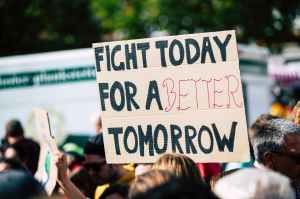
Though there have been reports of some positive growth in key areas, such as crime reduction, it must benefit all citizens, not just the wealthy, who frequently control the narrative.
The late pop star Michael Jackson’s song “The Man in the Mirror” serves as the starting point for upward mobility.

 GLOBAL COLLABORATION, EMPOWERMENT, LEADERSHIP, WELLNESS, AND RESILIENCE