COVID-19’s vaccine, politics, and socio-economics: Are Caribbean nations pricing themselves out of future visits?

BY: R.D.

Part I

The hidden economic engines that left town

Tourism has historically been the Caribbean region’s economic motor in former colonial rulers left more of the region.

It is the world’s most tourism-dependent country region, according to the World Travel and Tourism Council (WTTC) and the United Nations World Tourism Organization.

According to analysts, this business contributes to as much as 40% of the Gross Domestic Product on some islands (GDP). Since COVID-19, travel expenditures have decreased by an astonishing 42% (about $500 billion).

International travel and business travel had the biggest losses, with analysts estimating that international travel spending decreased by 76% and business travel spending decreased by 70%, respectively.

As unemployment rose and the domino effect persisted around the world, local businesses that had benefited from tourists were forced to close their doors even further.

It appears that every small business operation has dried up, and only a few of the fittest have a chance to maintain a normal standard of living.

Photo by Nathan Cowley

The levy that was previously in place has been relocated.

A few decades ago, some of these countries had robust economies. Sugar, banana, coffee, poultry, and bauxite companies, as well as a variety of other businesses, were critical to the area’s economic existence.

Globalization and technological advancement resulted in the selling of numerous businesses to foreign investors, as well as the transfer of personnel to save costs. However, according to numerous accounts, some of this global change was self-inflicted as a result of weak governance, as several leaders would concede.

Experts attribute the disinvestment to a range of factors, including decreased labor costs, increased tax benefits, the facility no longer having enough space to suit their needs, unforeseen business challenges, employee safety concerns, and the finding of better talent. Millennials, for example, possess young, innovative talents.

These jobs served as an economic engine, providing a safety net for what would have been the middle class today, which no longer exists, as well as others from a local mom-and-pop store strategically tucked on a tight road.

Photo by Skitterphoto

Many enterprises that had lasted for a decade at the expense of local communities either lost their competitive price or failed owing to enormous imports, poor management, lower output, and corruption.

These industrial closures have had an impact on neighborhoods that rely on small businesses like retail shops, restaurants, pubs, and street vendors.

It has widened the wealth gap and increased unemployment, particularly in the Caribbean’s dominant islands of Trinidad and Tobago, Guyana, Haiti, Dominica, Jamaica, and the Bahamas, as well as in other parts of Latin America that were already in dire need of economic stimulus.

Furthermore, regardless of whether political party is in power, the social division has risen with each successive generation, as have poverty and inequality.

Today, it appears that many philanthropic organizations are seeking donations rather than providing a space for the next generation to generate new ideas, which is critical to the long-term sustainability of these shores.

Taking from Peter to Pay Paul: A fine line to walk in terms of their own economic servitude:

According to analysts, COVID-19 has created a twofold economic shock compared to the 2008 financial crisis.

According to the IOM UN Migration, visiting and spending outside protected tourist zones is comparable to direct remittance, with countries like Haiti, the Dominican Republic, Guyana, and Jamaica accounting for almost USD 10 billion yearly.However, due to the worldwide shock, this number has also decreased.

Since the pandemic, commodity prices have risen globally, as have the prices of building materials and even school supplies.

Furthermore, as evidenced by a slew of leading economic data, supply chains exacerbated volatility in import, export, and producer prices.

Photo by Karolina Grabowska

Nations that were unprepared, on the other hand, continued to suffer the most. Many people blame lockdown for their ongoing financial difficulties, but it is not the only issue.

There have been reports of massive fare increases when taking a local taxi from an airport to a hotel since the COVID-19 pandemic. 

The pandemic has severely impacted unemployment and the service industry, leaving many local food banks unable to meet needs.

I’m here to report on what this reality has produced and how it has affected people, not to debate who should have done more to help when it was necessary.

The cost of excursion trips has nearly doubled, according to reports. Some of these businesses were already struggling financially prior to the outbreak. 

It’s as if you’re simply covering the expenses of those who are afraid to travel.

A simple COVID-19 test, which few argue is required for travel, usually costs between $20 and $35 USD.

According to recent visitors who visited Jamaica, returning on a flight can cost around US$80.00, though this varies depending on location.

Photo by Polina Tankilevitch

Many travelers have expressed concern that local customs officials appear to be using luggage fines to generate extra revenue while strategically targeting citizens.

A few ex-pats expressed concerns about shipping items ahead of time, citing increased hassle and the extremely high cost of customs clearance. 

The pandemic appears to have imposed several fines to make up for lost revenue from other activities.

Furthermore, after inspecting luggage, report any missing items to clear check-out. 

After receiving a fine for leaving items with a sale tag at the airport checkout, one traveler and her family decided not to return anytime soon.

It is not unusual for a group of locals to take a vacation to shop for new clothes. 

These visitors, who have families on these shores, often buy items with the intention of giving them away or returning them if they are unworn.

Furthermore, even bringing a few extra boxes of protected masks to help Aunt Jane was considered a business trip, and the imported ones at some local stores are significantly more expensive than she had paid elsewhere.

Prices can frequently differ from those of a nearby store a few steps away, particularly for basic food supplies, with little enforcement exacerbating the economic difficulties.

Unfortunately, it appears to be a missed opportunity for previously lost revenue and will discourage future trips, particularly for budget-conscious travelers willing to take the risk during this period of uncertainty and anxiety.

Part II

The truth or reality behind the masks

According to experts, as the global cost of living rises, the pandemic remains unpredictable, and vaccine skepticism persists, even among those who may have received the first dose, more families will fall further into poverty.

Photo by Maksim Goncharenok

The issue may not be with the number of people still on the road who are violating established restrictions aimed at slowing the spread of this disease.

COVID-19 survival is comparable to running a clandestine company. As a result, a sizable audience marches in time with the beat of their drums.

Many argued that the risk is worth taking in order to feed their children and pay their bills in the face of insufficient government assistance.

A few residents observed that only well-connected, wealthy politicians can afford self-quarantine, have access to healthcare, and live a normal life. 

Many impoverished individuals, previously excluded from the local economy, now face the wrath of an outsider, particularly those who resist vaccination.

Some people are frustrated because they perceive a division between those who have access and are almost certainly already vaccinated, while others appear to be blaming those who violate rules, demonstrate an extreme need for economic assistance, or who brought the virus to the region or spread it locally.

It is difficult to balance the need to open resorts and ports for economic gain with the need to avoid responsibility for the virus’s potential risk, regardless of who is carrying it.

While adhering to the guidelines is critical for visitors and residents alike, I feel that anyone who has tested positive for COVID-19 or has other medical conditions and is aware of potential medical complications would not jeopardize their lives. 

Additionally, as previously reported, there is a lack of vital resources, including enough ventilation and adequate bed space, as well as challenges in navigating healthcare systems that have outlived their elderly population and the unpredictable nature of healthcare expenses.

There is growing concern among local residents that healthcare systems are already overwhelmed with the task of meeting critical demands.

Furthermore, the surge in patients has put numerous local hospitals to the test. However, the pandemic has also revealed inefficiencies in other crucial areas that were already in place prior to COVID-19.

Overcrowding at a local hospital

If families are vaccinated as recommended, these countries will be able to recover considerably sooner, scientists say.

The difficulty in striking the right balance

The pandemic has divided many communities, with local officials debating whether businesses should remain open or temporarily close.

Managing pandemic danger while maintaining economic viability requires a delicate balancing act.

Some people said the confusion was exacerbated by the lack of consistency in local guidelines, which ranged from determining which companies would be closed to enforcing curfews and closing streets.

As I previously stated, tourism is a significant driver of many of these local economies. Managing the influx of visitors, some of whom may be unvaccinated, as well as the economic impact on the local economy if all are barred from landing, according to numerous local reports, is a difficult task.

When it comes to decision-making, the pandemic has put authorities in a bind. Closing the local economy necessitates a delicate balancing act, as others will perish due to the lack of an economic vaccine.

Even though many residents have observed social distance, wear masks, and have been vaccinated, frustration persists.

R.D.

According to reports, some visitors were restricted, whereas others were free to move around and party, not following safety protocols and were leaving secured areas.

Furthermore, many argue that leaders are using these times of fear, anxiety, and economic uncertainty to gradually push toward despotic political power through restrictions.

Photo by Monstera

Though it may not be a call to limit democracy for public health, freedom comes only from knowledge, and reasonableness is only possible if talk leads to agreement.

PART III

Behind the mask are the unseen victims of unvaccinated economics.

Local communities are coughing up an economic virus that has been dormant for decades, on top of a fragile system that had a bad cold for decades.

The pandemic has cast a spotlight on the region’s governance, exposing the region’s vulnerable labor force, mismanagement, and poverty.

Even though the whole region can’t be blamed for today’s inflation, supply chain problems, or COVID-19, it looks like some leaders have been playing economic poker.

It’s just that no one predicted the outcome of the dealt hand or the resolution of their nation’s economic problem. On the other hand, with the same deck of cards, each election cycle delivers a more secure promise.

Photo by Julia Volk

Many politicians and other well-connected individuals in these emerging and poor countries are like casino dealers; they always win. Thus, the pandemic has less of an impact on them because they are salaried employees paid by the public.

Several reports have detailed the spending, management, and overall accountability of COVID-19 funds. When there is a history of reported corruption woven into public service decisions, the reality is that this is what happens.

It’s not uncommon to see some leaders minimize or deflect when they have to justify numbers or compare audits to other countries in order to ease accountability concerns. However, the country’s independent accounting system conducts the investigation.

As the cost of food, utilities, public transportation, and even government services like vehicle registration and taxes goes up, many families are already having a hard time because they can’t afford to pay for these things. 

In many poor and developing countries, wages haven’t changed for years, so families have to make some sacrifices to keep up with rising costs.

Today, more individuals are concerned about inflation, growing living costs, job shortages, and food insecurity, all of which have contributed to increased economic fever and financial issues.

Today, not only do privately owned taxi and bus drivers require a booster shot, but so does a local shop outside the tourist protected zone.

The dynamics of youth and how to best serve them:

According to specialists, this is beyond the time when a vaccination will be available for that demographic or when students will be ready to return to a sense of normalcy in the classroom, which is crucial for their education and mental health.

Many students struggle to meet crucial academic standards due to a shortage of resources, forcing some to return to already overcrowded classrooms.

According to some estimations, three out of every four young adults are unemployed.

One of the few areas to find work is in contact centers, where many educated young people queue up to work.

Photo by Sora Shimazaki

Because of high unemployment and a weak currency, fewer middle-class people and more people living in poverty are committing crimes like robbery, murder, and assault.

Others struggle with massive student loan debt and a lack of career opportunities.

A small off-grid house from a low-paying job is becoming more and more difficult, and COVID-19 seems to have made it even harder.

Who is speaking for you at the table?

Nurses, doctors, and scientists have a critical role to play in educating the public about vaccination and vaccine safety. Rather than politicians, they are the ones on the front lines.

In addition to informing patients and their caretakers about the advantages and safety of vaccinations, they also provide information on the dangers.

Some people who are reluctant to get vaccinated because of religious views, distrust of their leaders, or ignorance may benefit from talking to a small support group about the vaccine.

According to reports, the United Nations World Tourism Organization (UNWTO) met to discuss a global coordinated partnership on the impact of the coronavirus on global travel and tourism, but who at the table represents impoverished nations?

Photo by August de Richelieu

We can only hope that future elections, regardless of location, do not sell or use this vaccine as a political platform.

Should society  fail to secure vaccine equity, as the majority of experts recommend, to prevent the virus from spreading, the consequences will be dire.

I agree that immunity may be the only solution to mistrust and or poor leadership.

Here comes the sun

The sun will rise again on these lands, and price increases may not be necessary if people follow the science and recommendations.

Despite the risk of contracting COVID-19, many people will continue to travel to reconnect with their history, whether for cultural reasons, business, vacation, or just a mental break.

Travel reports say that before COVID-19, a lot of people were going to places like the Caribbean, Europe, North America, and parts of Asia.

Additionally, trips to historic sites and cultural events in big cities are becoming increasingly popular as an addition to traditional beach vacations.

Photo by Natasa Dav

There must be a balance that permits everyone to navigate this recent major transition; locals, as well as entering and departing guests, must work together to ensure that no one feels excluded or under pressure to preserve a feeling of normalcy.

After duty, I’ll see you soon, with or without this mask! .. Keep yourself safe!

R.D.
One-Time
Monthly
Yearly

Make a one-time donation

Make a monthly donation

Make a yearly donation

Choose an amount

$5.00
$15.00
$20.00
$5.00
$15.00
$100.00
$5.00
$15.00
$100.00

Or enter a custom amount

$

Your contribution is appreciated. It will support, professional endeavors including civic engagement and professional development, nonprofits, and community organizations.

Your contribution is appreciated.

Your contribution is appreciated.

DonateDonate monthlyDonate yearly
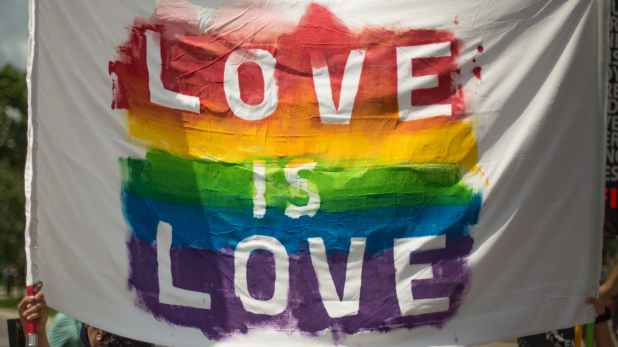

The rabbi is gay, what’s next on your shores?

BY R.D.MILLER

Does the location of LGBTQ(+) really matter?

Gil Steinlauf, senior rabbi of Adas Israel, one of the largest conservative movement-affiliated synagogues in Washington, DC, recently came out as gay.

Shortly after, Tim Cook, the CEO of Apple, announced his homosexuality shortly after. “You don’t just leave your wife to be gay any more than you would resign her to be straight,” one blogger wrote.

Photo by cottonbro

“Apple has lost its pioneering skills and sought more businesses,” wrote another.

When I write an opinion piece about this social issues that impact our community or nation, I often receive a common question.

Are you a member of the LBGTQ+ community?

My reaction has always been, “I have friends who are straight, gay, bisexual, transgender and some who are still trying to figure it out.”

So, what if our society evolved to the point where one could simply say, “I have friends from all walks of life, each on their own unique journey of self-discovery?” The fight for equality might be headed in the right direction.

Regardless, I’m writing this today because I firmly believe in the inherent goodness of humanity, even in the face of hate, division, wars, crimes against humanity, inequality, poverty, and any other challenges we may encounter.

If you’re reading this to determine my sexual orientation, you may have differing viewpoints. Similarly, if you’re here to learn about the challenges faced by others in the community where socio-economic status still poses an additional burden in the LGBTQIA+, that’s perfectly fine.

Before I address any curiosity,  I am a heterosexual man who has actively participated in multiple Breast Cancer walks. I am happy to report that my recent doctor’s checkup confirmed that I am cancer-free.

I’ve also participated in a Multiple Sclerosis (MS) walk, and my doctors have given me a clean bill of health. I’ve also been involved in multiple LGBTQIA+ events.

In my line of work, I have witnessed the unfortunate presence of violence and the scarcity of resources. However, amidst these challenges, there are also heartwarming stories of individuals who have managed to thrive with the help of a strong support system.

I believe that many people avoid supporting important issues in our society because it may make them appear to be one of those over there.

Some people will add to the conversation in a helpful way, while others will just watch from afar because their problems may be different from those on this side of the ocean. Because of this, the amount of help or lack of it can look like a lot of different things, especially in today’s world.

Nevertheless, this peace is simply using a small platform to share a few observations and thoughts, and awareness.

But, most importantly, to provide a voice to some of those who are less fortunate to be who they are and cannot afford or have the means to protect themselves against violence and discrimination.

Regrettably, even though they should have been protected from the social ice rain by the same colors, numerous individuals are frequently left to endure extreme temperatures without an umbrella solely due to the occupants, race, culture or socio-economic status, and simply, what I called the “location gay”

Photo by Katie Rainbow

I hope you continue to support all foundations, so let’s get started on what’s next I have to say.

The coming out!

Everyone, in my humble opinion, is a remarkable human being with boundless potential who absolutely deserves the chance to make a meaningful impact on their society.

Although it may come more effortlessly to those with greater wealth and privilege, it’s important to acknowledge that there are also individuals seeking a space where social disadvantage can be overlooked, just like a swipe of mascara.

Fortunately, Rabbi Gil Steinlauf and Tim Cook both have financial anchors, bridges, a solid foundation, and retractable vessels that can weather storms and bypass rough tides.

Fortunately, many wealthy and powerful people find that publicly disclosing their sexual orientation can increase their wealth and power. However, this is not a story about the Rabbi or Tim Cook.

Many pundits argue that Michael Sam, a player who openly identified as gay and was released by two NFL teams due to his sexual orientation, could have had a different career trajectory if he had focused on his defensive line skills instead of transitioning to offense, allowing the world in this contact sport to know too quickly that he was gay.

However, it’s worth noting that there might be some players who, despite facing mental health challenges or being charged with domestic violence, still manage to participate.

In Michael Sam’s case, it appears that the National Football League (NFL) indirectly transmitted the message that homosexuality should be kept in the closet, namely in the locker room, with a number on file.

Is there a prerequisite for coming out as gay? I inquired. Despite the media attention, the gay community’s stories are much larger than these two men

It is a profound observation: where is the balance for this pendulum that society appears to be fighting to keep in the middle, particularly for those without the means?

Even when the pendulum swings or roars to take all that is different, it is more difficult to get out of its course, much less find a canvas to paint in their own direction.

Other stories that are seldom told:

As I journey across various impoverished and developing nations, my purpose is to offer assistance to local schools by providing them with essential supplies, or to deliver inspiring speeches on topics such as tolerance, violence, and other pressing social matters.

Throughout my travels, I consistently observe a recurring socioeconomic disparity, much like what exists in affluent and influential countries. In some of these communities, the voices of its members may not always be acknowledged.

Yet,  their struggles bear resemblance to the times when people were unjustly denied the right to vote. Every endeavor to express themselves one told me feels like being marked for death.
I wondered who are the individuals that have the potential and perhaps the responsibility to do more.

In certain areas, the survival, access to justice, and availability of treatment for individuals may be influenced by factors such as economic status, political system, and laws.

Unfortunately, many frequently read news of high crime against humanity in general, not to mention individuals that society has labeled as a sin or an outcast due to barbaric ideologies.

Think what it must have been like for them to seek employment to feed themselves or their family.

Just as the fortunate few who have the resources to weather any storm, there are many individuals in the LGBTQ+ community who lack the means to escape the rising tides or find a supportive community when faced with adversity.

Even in a location as lovely and inviting  where the sun appears to always be shining, inclusion can be quite the delicate dance.

Today, many people are trapped by their location under an ancient colonial doctrine, a never-ending battle for acceptance in search of an anchor or a shield from a raging tide.

These are lovely places that many people visit for a vacation or to catch up with family members and reconnect with their roots, their is an anchor that needs to be lifted..

Many visitors associate luscious greenery, breathtaking sunsets, and blue water with a liberated vacation, but outside their villas and hotel rooms, victims are routinely teased, bullied, and even killed out of ignorance – even by straight perpetrators who, according to studies, may have been struggling with their homosexual tendencies.

For some, homophobia can be relentless, sweeping away anything that lacks stability like a raging ocean. These unchecked anti-waves have really taken a toll on several impoverished and developing regions.

The hidden colors are looking for a canvas.

The “locational gay” if such a term exists; encompasses more than just this person’s gender identity, It represents the complex interplay of fading colors from various skin tones, intertwined with economic and social disadvantages that persist especially within  community with  people of color.

It’s not just the Caribbean, Asia, or Latin America that have seen legislative changes affecting the LGBT community.

Reports have highlighted that some African leaders have made it more difficult for LGBT individuals to receive protection. However, there are also those who have taken a commendable step forward.

Anti-gay legislation in several nations where the service industry accounts for a sizable amount of the GDP may contribute to an increase in hate crimes. Furthermore, it endangers the victims’ lives while also reducing the country’s tourism business.

Despite minimal advancements in various areas, a significant number of individuals have unfortunately lost their lives.

Various individuals who died due to a savage ideology, often stemming from lack of knowledge and a trait of society that is handed down like an old recipe, and undoing decades of narrow-mindedness is quite the challenge.

There have been several reports of an increase in murders within the LGBT community since 2010. Youth and young adults between the ages of 18 and 30 were 2.41 times more likely to be victims of physical violence.

Gay 16, teenager was dead -Dwayne Jones beaten, stabbed, shot and ran over (AP Photo/Jay, J-FLAG)

Many parents endure discrimination as a result of having LGBT children, and they are more concerned with social stigma and antagonism today than with their children’s future possibilities.

Many people today could have realized their full potential, becoming great stars, teachers, and police officers. They, too, were son’s daughters, uncles, aunts, mothers, fathers, and friends, and many places today were unwilling to embrace them because they were gay.

I could have gone to any LBGTQ website, criminal data, or GLDD and fetched the ever-changing facts, but instead, I’d like to spotlight some of those who bear the burden.

The resentment felt by some people in these small communities has given rise to safety concerns, leading to feelings of shame and despair, and tragically, often resulting in instances of abuse, homelessness, and even loss of life.

human_rights_watch: Photo

The lack of resources, access to medical care, and support have also resulted in their expulsion from their community.

The only visual representation of a voice mail or iTunes appears to be the sound of broken sewer pipes leaking and hovering above their heads as a result of living under deteriorating bridges for may on this side of town.

Human Rights Watch reports an increase in violence against homosexual persons just because they are considered to be gay, and these communities receive little support.

Being gay is neither a sin nor a learned trait; however, bigotry, intolerance, and atrocities committed against this community or humans in general are.

What does true love look like?

“All people deserve to live with dignity and respect, free from fear and violence regardless of their gender and sexual orientation” – an excerpt from a proclamation by President Obama on May 29, 2015, at an LGBT pride event.

Photo by Tiger Lily

As I have stated throughout, equality is extremely important; nevertheless, what happens when some are perceived to be more equal?

Many people are unable to offer the resources they require to live a normal life, despite constant efforts by local groups to enact legislation to protect this population.

What happens if HIV-positive patients fear treatment?

HIV testing is essential to HIV prevention, treatment, care, and support, but impoverished people may avoid or have restricted access to it, according to reports.

A few folks I know who were with us but are no longer

(One) — Rupert. His church memberships and choir memberships began to dwindle soon after he came out.

He was repeatedly denied entrance to community gatherings and employment, leading him to flee for his own safety.

He was once burned alive, stoned, and mocked. Where is Victor today, and can you finish his story? Would you have told him to stay in the closet?.

Many people fled their towns to find solace elsewhere, yet they are still living in the shadows.

(Two) — Sonia dressed like a man, with brittle hair, cargo pants, and boots, despite the fact that she finds comfort in tending to the small town floral garden.

While some visitors admired her floral garden designs, others mocked her and threw rocks at her. Her sexual orientation had no bearing on her creativity.

(Three) —Burma is beautiful and does an excellent job.

She fits in well with her peers, comes from a pleasant family, and is well educated.

She, nevertheless, has a deep fear of revealing her true self. Despite speculation, she consistently dismissed inquiries about her decision not to have a child her age, even after they spotted her holding hands with her partner in a different part of town.

I often wonder if anyone had truly taken the time to understand her, they might have uncovered the painful truth of her past.

It was a devastating betrayal by her father’s trusted friends, who subjected her to unspeakable horrors during her childhood at a local bar.

Her trust in people waned as she had no one to rely on for help, and she became increasingly isolated.

Even after her passing from breast cancer, her remains were treated with an unjustified fear and prejudice, as if her sexual orientation was a transmissible disease.

Her remains have been laid to rest in the garden she lovingly cultivated.

I still have more to paint, but maybe you now have a clearer idea of why I write about this subject in order to preserve their memories.

Integrating your strength,  and open the cover for those still looking for shades:

Even though many regions have taken tiny steps, many communities and official institutions have accepted and will continue to recognize same-sex weddings.

A century of hostility, bigotry, and political dogma continues to threaten this tremendous transition, as others believe that a persistent wind may bring society back into the closet.

So, how can you rewrite this ship using economic power?

The economics

In their article, the Advocate stated that “the LGBT community earns its place at the table of economic opportunity with an input to the economy of over $1.7 trillion and several jobs thousands of jobs globally.”

Furthermore, Curve Magazine reports that the gay, lesbian, and transgender population spends more than $550 billion per year in the U.S. alone.

While some LGBTQ+ ships and planes have found their way to various coasts, who require disposable income to drive their economy, why not utilize your influence outside the closet to assist others who are still looking for a guiding light to traverse these uncharted waters?

Even though they may have reservations about the LGBT+ community, some of these high-end vacation destinations around the world can’t resist the allure of potential profits.

This community has an impressive reach to keep evolving and spreading awareness, especially when it comes to beautiful beaches and crystal-clear waters.

Promoting more education and grassroots support is crucial, even though changing a systematic issue may seem challenging. The positive outcomes will endure beyond any silence.

Some of the welcome mats that are laid out, not for their vibrant hues, but for their origins and price tags.

It’s quite amusing how certain groups are expected to meticulously plan their vacation itineraries solely around LGBTQ+-friendly destinations in the Caribbean, Africa, or any other region, as if it were a strategic move to win over their registered voters.

As the fight continues, there is an illusive tide of change:

Throughout history, it has become evident that the quest for equality often clashes with the ideologies of certain people in general.

I find it quite fascinating how a culture of homophobia has managed to persist over the years, intertwining with social and political factors to perpetuate stigma and inequality based on sexuality and gender.

A recent YouTube video by an Arizona pastor said that “if gays were executed, we could have an AIDS-free world by Christmas.” If the god they all adore is love for all, who decides those he doesn’t love?

Not the actual pastor

Today, countries in Africa, Asia, the South, and North, as well as Latin America and a few Caribbean islands have taken steps. Change takes time and is frequently resisted.

But as I have noted, do not be fooled there are many unanchored vessels that will require stronger anchors to hold any movements toward the bean of colors.

Today, many regional leaders remain deafeningly silent on human rights amendments or new legislation.

There are some who continue to argue that Homosexuals and their agenda, according to anti-gay protesters, have a negative impact on strong and healthy families, righteousness, and justice. However, these claims are met with skepticism by many.

Collaboration regardless of location, race culture, and economic status.

Despite statistical evidence of increased tolerance, this issue remains a deep stratification.

There are many places that struggle to gain acceptance on their own, while others, who are less fortunate, are forced to keep their flag folded and search for a different path. However, even though some of us may feel like outsiders looking in, there is still work to be done.

Unfortunately, other LGBTQ persons lacked the resources and are still attempting to book a private party where they may dance like no one is watching.

The gay community, just like other marginalized groups, must persistently advocate for equality. While they enjoy lively dances in various settings, there are often lyrics strategically inserted to demean and vilify the community, perpetuating intolerance and hatred.

Only when societies become more educated and tolerant will we be able to dance together and turn back the clock on a monster that was created.

Advocating for the legalization of marijuana, even with its potential for long-term addiction, imagine if all human rights embraced a similar cause and observed the outcome.

No, it does not! You don’t have to be gay to support their cause, but should it matter?

Just remember the new design you waited 24 hours in 10-degree weather to purchase the next time you turn on your iPhone to spread hate. The designs were vetted by a gay man.

Love knows no boundaries – it transcends economic status, culture, and location.

Rest in Peace • • Leslie Feinberg – for fighting for equality for all.

One-Time
Monthly
Yearly

Make a one-time donation

Make a monthly donation

Make a yearly donation

Choose an amount

$5.00
$10.00
$20.00
$5.00
$15.00
$100.00
$5.00
$15.00
$100.00

Or enter a custom amount

$

We are truly grateful for your contribution, which will go a long way in supporting the causes we write about.

Your contribution is appreciated.

Your contribution is appreciated.

DonateDonate monthlyDonate yearly

Leave a comment

This site uses Akismet to reduce spam. Learn how your comment data is processed.

Commentary: Celebrity and criminal justice: A test of the Jamaican criminal justice system`

BY R.D.

More that just a trial

Jamaica-Reggae Super Star, VYBZ Kartel- Photo Credit-Carib Photo

The anticipated verdict focused primarily on the Jamaican justice system’s handling of the last disposition, its far-reaching impact on celebrity justice, the treatment of victims, and the message it would send to the next generation, where trust in the criminal justice system is often low.

The trial was larger than the prosecutors, defense counsel, witnesses, law enforcement, how they gathered and preserved evidence, or the lack of communication and proper rules.

Although the Vybz Kartel case did not receive the same worldwide notoriety as the O.J. Simpson case in 1995, A number of individuals in the Caribbean closely monitored this case to determine the outcome of justice.

Quietly, to many, this public case brought back memories of earlier ones in which earlier politicians and the rich and powerful people in the region often walked away free, even when the evidence pointed out that a crime had occurred.

This is not to say that all rich, famous, and powerful defendants were guilty in all earlier cases. However, as many Jamaicans waited in anticipation of the verdict, the alert for civil disobedience and vigilante justice was high.

A test of the judiciary system

Luckily, amidst a divided nation and a high-stakes trial, the Jamaican judiciary system demonstrated its resilience by upholding order following the verdict.

It was truly remarkable how people managed to gain a deep understanding of the jury system and the intricacies of the court process, thanks in large part to the invaluable contribution of the media.

Often, in regions where poor economic conditions still have a strong hold, justice is often seen through the eyes of one’s economic status and notoriety.

In fact, as much as we would like to see a balanced system, often these trial outcomes mirror several other countries based on one’s race, sex, creed, and color.

The mandated strategies to combat crime and public safety should not create a generation of hopelessness. It should make sure that when penal codes are violated, the rule of law as written in the “said constitution” remains intact.

Rule of law, public service, and safety are extremely important, whether in a democratic or totalitarian system of government. To promote central control, a responsive government is required.

This concept guarantees the selection and proper staffing of the departments to uphold integrity and balance the public safety mission.

Who else will be watching?

In the Caribbean region, criminal justice has undergone a transformation, exemplified by the evolution of the police force, which began as a class system protecting private property in Great Britain in the early 18th century and has now evolved into a decentralized global system.

Undoubtedly, this verdict will spark months of debate, offering a fresh perspective on the functioning of this process.

Debating the rule of law is nothing new. After testing the British common law in a court of law, other nations also underwent a period of amendment.

When colonial British powers expanded throughout the Caribbean region, they brought not only slaves, but also a criminal justice system that laid the groundwork for how the government protects its people and implements justice.

However, even though many of his followers may desire restoration and a mental break from colonial imprints, if all local appeals fail, he still has the opportunity to take his case to a system where technology still reigns supreme.

The verdict has put the Jamaican judicial system, law enforcement regulations, entertainers’ role in the system, and the possibility of buying justice to the test. This verdict is more than just one man, and the impact will be long-lasting.

Unfortunately, if the government does not use this opportunity to send a message, key departments will soon be unable to function to their fullest capacity as required to maintain public safety and a fair and balanced system.

What is sad about this verdict is that, despite a modernized process, it appears that when a crime has been solved in the region, several departments stay on trial afterward, such as Vybz Kartel’s conviction.

The final analysis suggests that Vybz Kartel’s new jail number won’t have any impact on the Jamaican stock exchange, the number of additional prisons required, or the economic situation.

However, if this criminal trend persists, given our limited resources, we’ll find ourselves with more questions than solutions when it comes to combating crime and ensuring public safety. In addition, it seems that Jamaica and other regions will soon find themselves in need of additional prisons.

This particular aspect of the justice system often goes unnoticed, particularly in cases where new prisons are being constructed and operated by private entities.

This verdict, perhaps even for this case, also showed that there is some justification in the system somewhere. However, it appears that the blame game persists, focusing on what went wrong and suggesting potential solutions.

Training is now critical and, if the body of government that plays a vital role in upholding the law refuses to investigate gaps from preserving of evidence, and ensuring that officers can conduct comprehensive investigations from the emergency system to tracking criminals, to redefining agility and structural deficiencies, then public trust will still continue to decline.

The community, officials, or the system in general have to be careful not to blame everyone immediately if the outcome is not favorable to expectations.

Dedicated employees might have made some mistakes in the process, but what has taken place after the verdict is that law enforcement seems to have become the focus of the debates.

In the future, the government should establish a commission to examine these issues and determine whether poor staffing and inadequate training in these crucial areas require immediate attention.

Many argue that the system should meet an independent commission, which will be far from coerced-subjectivity and politics, to check any lapse in compliance that has led to overall deficits across the agency that necessitate action.

Photo credit:Getty Images

They must collaborate, communicate about the agency’s overall process, maintain ongoing security, and ensure that only authorized users have access to sensitive information.

Although they can slow down the process from hiring to implementing human resources functions, checks and balances are always necessary.

However, immediate action is required to address the concerns of the dedicated staff and, moving forward, to provide some level of internal and external oversight.

Even though I had never heard of him before this trial. However, I understand that he has a large following, and some people may disagree with the outcome, which is perfectly acceptable and democratic in any society. We cannot force anyone to love.

On the other side, imagine the impact he could have had in mobilizing the next generation for better things. Many locals remain l optimistic that this time justice was in the open and not taken up in the hands of a few through retaliation.