

BY R.D.
Part I
Although the glass ceiling may have been shattered in the Caribbean and other impoverished and emerging countries, it still remains intact.
Despite having more tools, data, and even resources to tackle problems, it appears that with each election cycle, the stakes become higher.

Photo by Sharon McCutcheon
Political opponents will debate which candidate is most suited to tackle socioeconomic concerns including violence, poverty, inequality, and division—even those who have contributed to the discourse— to establish a brighter future.
It can be challenging for talented individuals to gain a place at the table. It isn’t because of what they know, but rather who they are.
Today, my opinion is a detached approach, reviewing a few female leaders in the region, and unveiling hidden potential in a few voting boxes.
Several women have risen to the challenge since the colonial era, thereby ushering in a new era of leadership. However, since the few women I have chosen to highlight, several things have changed.
They have successfully cracked a few glasses, but are they really busted in the region.
Shortly after a few successful women leaders lost re-election campaigns, many took advantage of the chance to blame them for their failures, rather than praising their accomplishments and adopting what experts saw as poor decisions on key matters.
They were excessively tough, held strong opinions, exhibited an attitude, and struggled to adapt to shifting demographics, thereby distancing themselves from the working class.
A list of notable women leaders from the Caribbean archives:
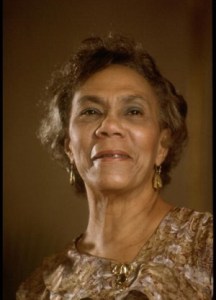
The Hon. Eugenia Charles: Prime minister of Dominica, July 21, 1980, – June 14, 1995,

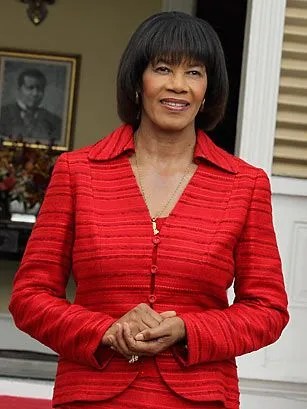
The Hon. Portia Simpson-Miller: Prime minister of Jamaica; March 2006 – September 2007 and again January 2012 – March 2016

The Hon. Kamla Persad-Bissessar Prime Minister: Trinidad and Tobago, May 2010 – September 2015.
In recent decades, these women highlighted above have emerged from the shadows and pursued positions of greater responsibility. However, unfortunately, many of them have faced failure.
The lack of additional openings in the ceiling has made it difficult for a lot more stuff to get through.
Eugenia Charles holds the distinction of being the inaugural female prime minister of Dominica and represents the Caribbean’s first female lawyer.
Since the death on July 21, 1980, until June 14, 1995, Dominica has not experienced any further deaths.
All three candidates, Portia Simpson, Kamla Persad, and the late Eugenia Charles, lost their re-election bids. Instead of focusing on their political achievements, it led to more critical examinations of how they lost.
Several historical reports show that even as leaders of their respective countries, Portia Simpson-Miller and Kamla Persad were subjected to unreasonable and cruel treatment by the press.
Political experts report that women faced pressure to achieve more with limited resources, including from peers and dictating men in the legislative-parliamentary system.
Frequently, individuals’ gender takes precedence over their abilities or commitment to public service. But for this opinion, Instead of focusing on what should have been done, my main concern is determining the most ideal course of action for these nations going forward.
As a side note, other women have served as Prime Minister of the Netherlands Antilles, which include Aruba, Curacao, St. Maarten, and Bonaire, and are known as Dutch Caribbean colonies.
The hazy mirror continues to struggle with cleaning up the remnants of its past.
Leta Hong Fincher of CNN recently reported that a “United Nations and Inter-Parliamentary Union report highlighted that 10 of 152 elected heads of state were women, and men made up 75 percent of parliamentarians, 73 percent of managerial decision-makers, and 76 percent of people in mainstream news media.” Fincher said.
Women have significantly contributed to the advancement of these local political communities, thought men often dominate them, whether as educators, nurses, police officers, or wives who keep the family together.
Despite the fact that many great female leaders have emerged in various societies, there is still a significant gap between gender equality and political advancement.
There are many barriers that still exist in our society, and while I am not qualified to speak on women issues, but many have been documented and may continue to play a role today.
For example, I recently read about Lisa Hanna, a former World 1993 contestant and Jamaican Member of Parliament whose personal beauty overshadows her ideas.

Photo by Emre Can Acer
Sadly, it seems on some of these shores today, the selection of our modern-day female leaders resembles a “beauty pageant,” with their physical appearance taking precedence over their abilities or economic policies.
The room’s unspoken elephant:
According to political pundits, opposition leader Dr. Phillip was one of Jamaica’s finest legislators, and his experience benefited the country greatly.
However, because demographics have shifted to a younger voters, some likely voters may believe it is time to hand over power.

Photo by Tima Miroshnichenko
Can he or others, on the other hand, instantly remove the barriers that women frequently face in politics, barriers that have been woven by a decade of a stained mirror woven by an old colonial and slavery mentality that only a few people can overcome?
Most importantly, can he use his abilities and skills to capture the imagination of young voters and persuade them to change course or continue to steer this political ship into an iceberg?
To show, an elephant is present in political and leadership rooms worldwide, including Jamaica. Even though her political views may accord with the majority, her time to lead tend to be uncertain.
In the eyes of many Jamaicans, Lisa Hanna has a better chance of delivering a clear decision concerning the country’s future than any other candidate, regardless of party affiliation.
The question of whether the Honorable Dr. Phillips will hand over his power to her or another comrade after decades in office has sparked controversy.
Is she or any other comrade able to put pressure on the Honorable Dr. Phillips, leader of the People’s National Party (PNP) to yeald power?
When it comes to guard changes, it is important for the party to acknowledge that, eventually, the male emperor may have to give up some power.
Unfortunately, it appears that no one has the authority to persuade a less-than-enthusiastic male opposition leader to cede control.
Many locals thought that it would provide the nation the opportunity to mount a serious challenge against Prime Minister Holness.

Hon. Lisa Hanna: Member of Parliament-Jamaica
It would also serve as an inspiration for future generations of young women, encouraging them to participate in politics and pass legislation that safeguard and better their futures.
Will she succeed Dr. Peter Phillips’ as Leader of the Opposition remain an open question?
Unfortunately, I am not a political expert or a voter, but based on my observations, it appears that when the PNP ship sinks in the next election, the current leadership will also go down with it.
Part II
What is the next step in the search for the next woman leader?
There was minimal discussion of veiled sexism or misogynistic views. I mentioned before that I am not an expert on women’s upward mobility; they know what is best for them and where they can excel in society.
Call it like it is: It is crucial to acknowledge and not downplay the subtle or minimal discussions about hidden sexism and misogynistic viewpoints.
While it can be challenging to balance their respective responsibilities, it is equally important to have a group of next-level women players on the bench who are willing to step in and handle the political game.
Often by the time she assumes leadership, the outcome often undergoes significant changes.
Every election should unquestionably focus on the next generation, with rigorous debates that appropriately balance voters’ legitimate concerns and interests with their economic future.
The gradual rise of populism in the Caribbean, particularly today, has never been successful. It almost always results in obvious personal financial gains for many elected officials.
Unfortunately, Lisa’s experience has paralleled others in modern politics—difficulties, setbacks, a few wins, and more barriers. The glass ceiling remains mainly intact, despite a few cracks.
It also provides in-depth understanding of the root causes of not enough of women in leadership roles, both locally and internationally.
A delicate balancing act
Again I’m not an expert on women’s politics, but despite the fact that more women are running for office in the region, it appears that the men in charge, are still in charge.
A sizable contingent of supporters or women at the table does not always result in legislative victories.
Economic policy-making in the region sometimes resembles learning the ropes at a local mechanic’s shop. Only when a supervisor has no choice or can no longer lead, then they spread the opportunity to show off the staff skills.

Clinging to power, on the other hand, breeds division, disconnect, and a stalemate of new ideas for advancement in paving the way for the next generation of female leaders.
In order to bridge the gap between the wealthy and the poor, it is crucial to develop a comprehensive strategy that addresses women issues, safety, abuse, criminal activity, like attracting new investments, to promotes economic growth.
This is particularly important given the ongoing COVID-19 pandemic, stagnant economic conditions, and high levels of unemployment.
Of course, some will push back to appear to be conscious of these issues, and even a day at church before an election, which I understand; they’re all politicians, and I’m not in the room, but after the sermons on change, it appears to be the same scriptures.
If the regional legislative system requires future female leaders to win the approval of men in order to ascend to the top, this is problematic.
Will the elephants leave the room so that other well-qualified female leaders can become the party’s commander in order to be elected as the next Prime Minister?
The revolving door of leadership:
Considering the current political climate, this assessment is not excessively severe. Many political leaders utilize appointed positions as a means to showcase their commitment to diversity. However, once elected, they tend to govern in a manner reminiscent of the old boys’ system.
Being a good leader is all about maintaining a stable environment and understanding that, as a passenger, you may benefit from your years of road experience rather than trying to drive while distracted by personal requirements.
Every election cycle appears to have the same guards and a similar platform for economic prosperity on many fronts, jobs, education, and access to good and affordable healthcare regardless of party affiliation, particularly in poor and developing countries plagued by crime and economic stagnation?
Perhaps term limits should be considered, and communities throughout the region should ask themselves: do they feel safer, better off, regardless of party affiliation?

Photo by Stephen Rupp
Every vote has consequences, but losing an election does not mean that women’s advancement in the Caribbean or elswhere is over.
More women in politics are needed, especially for adolescent girls who need a role model, better education, job opportunities, healthcare, and security.
These communities must begin to prioritize what is best for their country over short-term personal benefit.
Many people believe in “democracy,” yet in an oligarchy system in which leaders choose who they believe their society will recognize based on an emotional connection, but are completely disconnected from the reality of the community’s needs.
This allows the elected leaders to gain more control over their personal power while pretending to be working for the community at all times.
Often, operatives are purposefully used even at the highest levels; many at the table will hear her voice, but if it is solely for campaigning to keep power for personal socioeconomic standing, she must reconsider her job or impact in building the next generation.

Photo by Mikhail Nilov
It’s no different from sending Mother’s Day tweets to your constituents, which is a nice gesture but lacks a comprehensive economic strategy aimed at lifting these young women out of poverty, as well as protection, victim rights, and resources to stay safe and care for their families.
Giving out a few shopping bags to the impoverished is always a good thing, but when it comes with a camera and a 30-second film to tweet, it’s approaching exploitation.
While this is helpful for increasing voter turnout and preparing for the next election cycle, long-term economic mobility is still a key factor in the divided neighborhoods.
Taking a stand in the face of reality.
PART III
To be more than a statistic, more women must unite around similar threads, regardless of political allegiance, to show that politics and action can be the difference between success and failure for students.

Photo by PICHA Stock
Because many of the women in the region’s official titles are “former,” this is not the time to embark on an apology tour, because it cannot become a safe haven.
It’s been proven in numerous studies that men are notoriously bad at apologizing for their mistakes.
To overcome these barriers, lmore eaders must coach and encourage the next generation to lead. Young people in the region must believe that they have the potential to become the region’s leaders.
Approximately half of women in the workforce today have an undergraduate degree, matching the number of men with a college education according to Pew’s analysis and academic research.

Sadly, despite these academic achievements, there are still barriers to developing leaders and business owners who can serve as role models for the next generation of leaders and owners.
These leaders must view the obstacles or chronic challenges that women confront as an integral part of them, rather than as women working in distinct areas of the house to change the hurdles, especially in impoverished communities.
The next generation of leaders in the region must know that there is still hope for them.
This is not a last-ditch appeal for males to resign from positions of authority. And just because you cannot see the elephant in the room, it does not imply he is not present.
Given the complexity of the global economy, a candidate’s intellectual and physical capacity to lead a country in distress is a fair issue; yet, given the current situation, I believe she must have a fair shot if she is equipped.
It can be done, and nearby is a ray of light.
Prime Minister Mottley is widely recognized as one of the region’s most brilliant independent thinkers, having previously been elected as the political opposition’s leader prior to his unexpected triumph in 2018.
She recently pushed for stronger moral leadership and critical collaboration to enhance health systems across the area, particularly in light of the COVID-19 pandemic.

The Hon. Mia Amor Mottley: Prime Minister of Barbados
Her charismatic leadership and understanding of what it takes to lead in the twenty-first century make her a refreshing addition to the region.
Reports say she put the interests of her country ahead of personal gain, mismanagement, and corruption.
Hope does exist, but its realization will require more than just Prime Minister Mottley’s efforts. As noted, to ensure the development of the next generation of players, it is crucial for the team to have a group of reserves readily available, rather than waiting until the season is over to rebuild.
Furthermore, there are other women all over the world who are inspiring others, breaking down barriers, and forging their own paths, particularly in poor and developing countries.
The number of people occupying higher office chairs has been increasing for decades, even though there are fewer people in these areas, especially in coastal regions and other impoverished,and developing nations, but the sun is on the horizon.

While not all women share the same approaches, political methods, experience-based values, religious, culture or other views, the drive for socioeconomic equality, upward mobility, and gender equity remains, as various scientists have underlined.
I don’t have a ballot and I’m not voting for anyone. A female candidate should not lose an election just because she is female or because she is competing against a male candidate; similarly, a male candidate should not lose an election simply because he is running against a female candidate.
Today, I only wanted to highlight a few what i I believe are generally underestimated in terms of what they’ve accomplished, the challenges they’ve faced, and the work that still needs to be done to attain that balance.






 GLOBAL COLLABORATION, EMPOWERMENT, LEADERSHIP, WELLNESS, AND RESILIENCE